


1. The Growing Necessity of Low-Altitude Airspace Security
In the modern era of rapid technological advancement, the proliferation of Unmanned Aerial Vehicles (UAVs) has brought both opportunities and significant security challenges. While drones are used for photography and delivery, they also pose risks to privacy and the safety of critical infrastructure. This is where drone detection and alarm devices become essential tools for security personnel. The ability to monitor low-altitude airspace effectively is no longer a luxury but a necessity for government buildings, airports, and private estates. Understanding the landscape of drone threats is the first step in building a robust defense mechanism that can respond to unauthorized flights before they become a serious incident.
As drone technology becomes more accessible, the complexity of these devices increases, making them harder to detect with traditional visual or acoustic methods. Modern drones can fly at high altitudes and stay silent, bypassing basic security measures. Consequently, implementing sophisticated drone detection and alarm devices provides a layer of electronic surveillance that works around the clock. These systems are designed to scan the electromagnetic spectrum, identifying the unique signatures of drone control and video transmission signals. By establishing a proactive defense perimeter, organizations can mitigate risks such as corporate espionage, smuggling, and physical threats to public safety.
2. Advanced Wireless Signal Algorithms and Detection Range
The core efficiency of modern drone detection and alarm devices lies in their signal processing capabilities. Utilizing a new generation of wireless signal algorithms, these devices can scan an ultra-wide spectrum ranging from 30MHz to 6400MHz. This massive range ensures that almost no consumer or industrial drone can operate undetected, as it covers everything from standard 2.4GHz and 5.8GHz bands to non-standard frequencies often used by custom-built or modified UAVs. The algorithm doesn't just look for "noise"; it intelligently distinguishes between background radio interference and the specific digital signatures of a drone's communication link.
This technological edge allows the device to accurately identify and distinguish various types of UAV signals across different frequency bands. In a world where the radio environment is increasingly crowded with Wi-Fi, Bluetooth, and cellular signals, the ability to isolate a drone signal is paramount. The precision of the algorithm reduces false alarms, which is critical for security teams who need to trust their equipment. Furthermore, the wide-spectrum approach means that as drone manufacturers shift to new frequencies to avoid jamming, these detection devices remain relevant and effective, providing a future-proof solution for airspace management and protection.
3. Hardware Durability and Operational Reliability in Extreme Environments
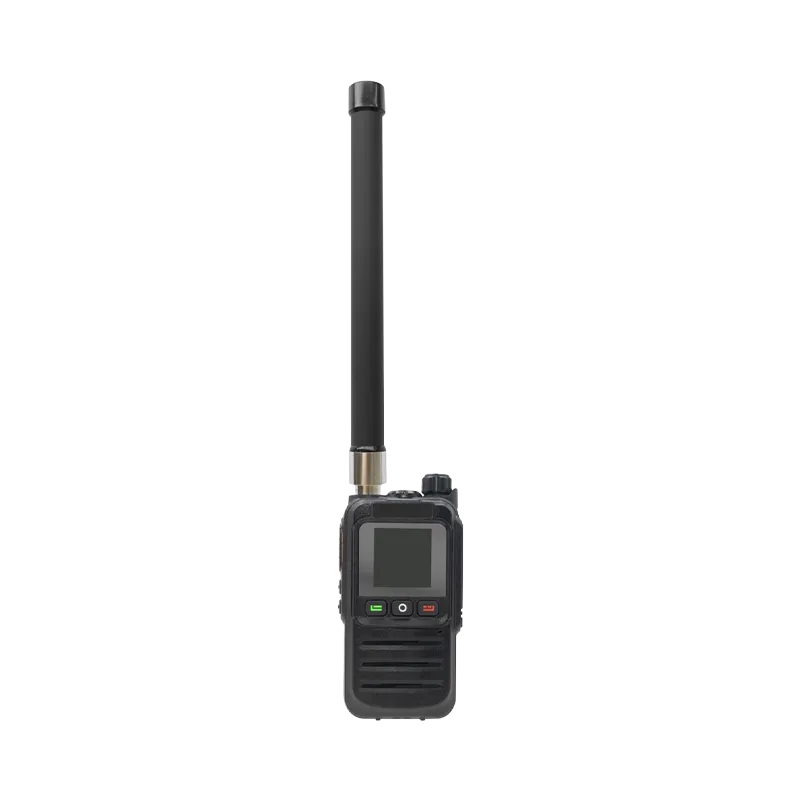
Beyond the software, the physical design of drone detection and alarm devices is built to withstand the rigors of field operations. A key feature is the 1.5-inch color screen, which provides clear, real-time data to the operator, allowing for quick decision-making. Despite its powerful capabilities, the device is designed to be compact and portable, weighing only about 220g. This makes it an ideal companion for security guards on patrol or for quick deployment in temporary event spaces. The inclusion of a 6000mAh removable large-capacity battery is a game-changer, offering up to 15 hours of continuous operation, ensuring that the device doesn't fail during long shifts.
Operational reliability also extends to environmental resilience. These devices are engineered to work normally in extreme temperatures, specifically as low as minus 40 degrees Celsius. This level of durability is essential for use in high-latitude regions or during harsh winter conditions where standard electronic equipment might fail. The use of a Type-C USB charging port adds a level of modern convenience, allowing for easy recharging from power banks or standard vehicle chargers. This combination of long battery life, wide operating temperature range, and portable form factor ensures that security teams have a reliable tool regardless of where their mission takes them.
4. Practical Application Scenarios for Enhanced Protection
The versatility of drone detection and alarm devices allows them to be deployed in a vast array of scenarios. In industrial settings, such as oil and gas depots or chemical parks, these devices act as an early warning system to prevent drones from causing accidental or intentional damage to sensitive equipment. In the context of large-scale public events, like concerts or sports matches, they help maintain a "no-fly zone" to protect the safety and privacy of attendees. Prisons also utilize this technology to intercept drones attempting to drop contraband into the facility, a growing problem for correctional departments worldwide.
Furthermore, the technology is vital for government offices and military installations where information security is of the highest priority. By detecting drones early, these entities can deploy countermeasures such as jammers or decoy devices more effectively. The portability of the device also makes it suitable for individual use, such as protecting the privacy of high-net-worth individuals at their private residences. Whether it is used for fixed-point monitoring or mobile patrolling, the device provides a comprehensive security solution that adapts to the specific needs of the environment, ensuring that the user always has the upper hand in low-altitude defense.
5. Shenzhen Yonghao Innovation: Your Partner in PNT Security
Established in 2014, Shenzhen Yonghao Innovation Technology Co., Ltd. is a national high-tech enterprise and a leading solution supplier integrating R&D, manufacturing, and sales. We specialize in Beidou navigation positioning, time service, and drone defense technologies. Strategically located in Shenzhen's Pearl River Delta, we leverage global cost efficiencies to provide high-quality, precision-engineered products. Our mission is to enhance the security and reliability of Positioning, Navigation, and Timing (PNT) information across various industries, including autonomous vehicles, precision agriculture, and UAV defense.
Our product portfolio is extensive, ranging from high-precision GNSS antennas to advanced drone detection and alarm devices. With over 10 years of industry experience and more than 5000 successful cooperation cases, we have established ourselves as a trusted partner for over 200 enterprises worldwide. Our senior R&D teams are dedicated to sustainable innovation, ensuring that our solutions meet the evolving challenges of the modern world. At Yonghao Innovation, we don't just sell products; we provide tailored high-precision Beidou solutions that are customized to your specific industry requirements, backed by professional technical support.
FAQ
Q1: What is the detection range of these drone detection and alarm devices?
Our devices feature an ultra-wide spectrum detection range from 30MHz to 6400MHz, allowing them to identify various UAV signals across multiple frequency bands.
Q2: How long can drone detection and alarm devices operate on a single charge?
Equipped with a 6000mAh removable battery, these devices offer an impressive battery life of up to 15 hours for continuous monitoring.
Q3: Can drone detection and alarm devices work in very cold climates?
Yes, the hardware is designed to operate normally in extreme environments, including low-temperature conditions down to minus 40 degrees Celsius.
Q4: Are drone detection and alarm devices portable enough for field use?
Absolutely. The device weighs only 220g and has a compact size of 125mm x 55mm x 35mm, making it highly portable for security patrols.
Q5: Do drone detection and alarm devices require complex training to operate?
No, they feature an intuitive 1.5-inch color screen and a user-friendly interface, ensuring they are easy to use even for personnel with minimal technical training.