

We Have The Best Solutions for Your Business
Precision Navigation Solutions for a Connected World
As a leading solution supplier integrating R&D, manufacturing, and sales, we offer a wide range of products including GNSS satellite antennas, positioning terminals, data communication products, and customized high-precision Beidou solutions. Our expertise spans measurement & monitoring, aerospace, communication time service, autonomous driving, mechanical control, intelligent transportation, driving tests, and training.
In my career, which now spans over a decade in the high-precision world, I’ve seen companies invest tens of thousands of dollars in the most advanced RTK receivers, only to be frustrated by slow fix times and inconsistent results. The culprit, time and time again, is that they treated the single most important instrument in the chain as an afterthought: the RTK GNSS antenna. It’s an easy mistake to make, but a fatal one for any serious operation. The antenna isn't just an accessory; it is the cornerstone of certainty upon which the entire system is built.
The magic of RTK is its ability to use carrier phase measurements to achieve precision. But that delicate phase information is incredibly fragile. It's constantly being attacked by multipath signals bouncing off the ground and nearby structures. A standard antenna is defenseless against this onslaught, feeding the receiver a messy, corrupted signal that makes resolving a fix difficult or impossible. A professional-grade RTK GNSS antenna, however, is an active defender of signal purity. Through advanced designs like choke rings or quadrifilar helices, it is physically and electronically tuned to reject these reflected signals, delivering only the clean, direct line-of-sight measurements the receiver needs.
Furthermore, for RTK to work its magic quickly and reliably, it needs to process signals on multiple frequency bands, like L1 and L5. This allows the receiver to remove the massive error caused by the Earth's ionosphere. This critical function is entirely dependent on having a multi-band RTK GNSS antenna that can capture all of these signals with high fidelity. Without this, your expensive dual-frequency receiver is effectively flying blind, unable to use its most powerful error-correction tools.
Ultimately, the receiver can only calculate a position based on the data it is given. Feeding a world-class RTK engine with a poor-quality signal is like asking a master chef to cook with spoiled ingredients—the result will inevitably be disappointing. Investing in a superior RTK GNSS antenna is a direct investment in the quality of that raw data. It is the single most important decision you can make to ensure you get a faster fix, a more reliable lock, and the certifiably accurate results that your professional reputation depends on.
Featured Products
Collection about xyzgnss
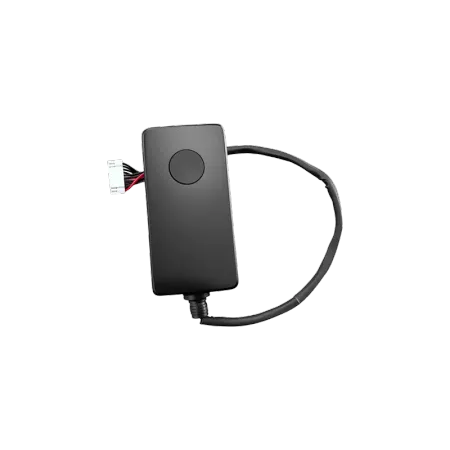
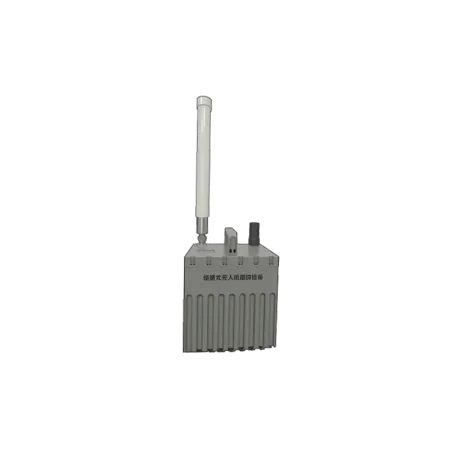
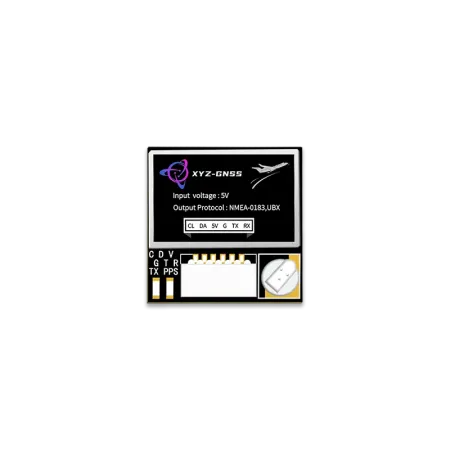
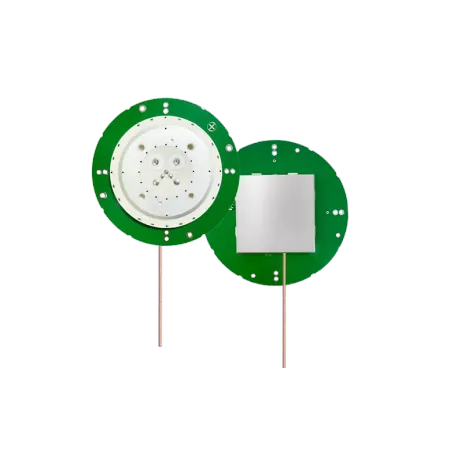
RTK GNSS Antenna
RTK GNSS Antenna
Frequently Asked Question
Do you have any question?
The key differences are its multi-band capability and its phase center stability. A professional RTK GNSS antenna is designed to receive multiple frequency signals (L1, L2, L5) from each satellite, which is essential for the RTK algorithm to correct for ionospheric delay. It is also engineered to have a highly stable phase center, meaning its electronic measurement point does not wander, which is critical for repeatable, high-accuracy measurements.
"Multi-band" means the RTK GNSS antenna can receive and process several different frequency bands (L1, L2, L5) broadcast by the GNSS constellations. By comparing the timing of signals on these different frequencies, a compatible receiver can accurately model and remove the largest source of error in satellite positioning—the ionospheric delay. This results in a much faster and more reliable centimeter-level fix.
Yes, for a stationary base station, the ideal RTK GNSS antenna is a geodetic-grade antenna, often a choke ring or a similar high-performance design. These antennas are larger and designed to offer the absolute best multipath rejection and phase center stability, providing the cleanest possible correction data for all rovers in its network.
For a drone or any lightweight rover, the best choice is a SWaP-optimized (Size, Weight, and Power) RTK GNSS antenna, typically a quadrifilar helical antenna. These antennas provide excellent multipath rejection and a stable phase center in a very small and lightweight package, making them perfect for applications where payload weight is a primary concern.
The phase center is the precise virtual point within the RTK GNSS antenna from which the satellite signal measurements are referenced. For high-precision work, it is absolutely critical that this point remains stable and consistent as the antenna tracks satellites across the sky. High-quality antennas are designed to minimize "Phase Center Variation" (PCV) to prevent measurement errors.
Yes, absolutely. A high-quality RTK GNSS antenna provides a cleaner signal with less noise and less multipath error to the receiver. This higher quality data allows the receiver's RTK engine to solve the integer ambiguities much more quickly and reliably. This means you will achieve the centimeter-level "fixed solution" faster and maintain it more robustly in challenging environments.