

We Have The Best Solutions for Your Business
Precision Navigation Solutions for a Connected World
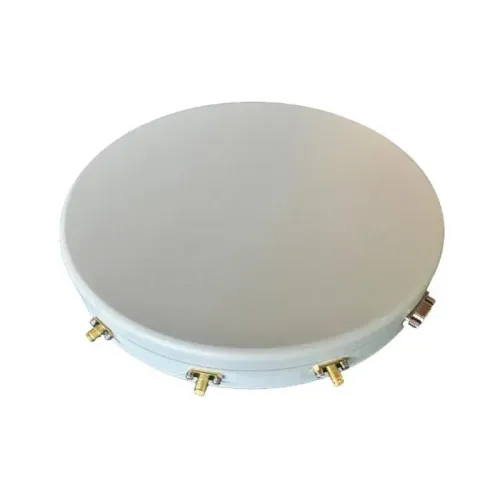
As a leading solution supplier integrating R&D, manufacturing, and sales, we offer a wide range of products including GNSS satellite antennas, positioning terminals, data communication products, and customized high-precision Beidou solutions. Our expertise spans measurement & monitoring, aerospace, communication time service, autonomous driving, mechanical control, intelligent transportation, driving tests, and training.
When I started in this industry over a decade ago, a "GPS" was a chunky device you put on your dashboard. Now, positioning is embedded in everything. But throughout this incredible evolution, one fundamental truth has remained constant: the entire multi-billion dollar satellite navigation infrastructure is utterly useless without one small, critical component—a high-quality GPS antenna. I’ve built my career on understanding and optimizing this crucial link, and I’ve seen countless projects fail because this component was treated as an afterthought.
Too many people see the GPS antenna as a simple "puck" on a wire. They don't see the sophisticated engineering within—the precisely tuned ceramic patch, the carefully designed low-noise amplifier, the advanced filtering. A professional-grade antenna isn't just listening for a signal; it's fighting a battle. It’s battling to pull an incredibly weak signal out of a sea of radio frequency noise. It's battling to reject reflected multipath signals that bounce off buildings and corrupt the data. A cheap, poorly shielded GPS antenna will lose that battle every time.
In the world of commercial telematics and IoT, this failure isn't a minor inconvenience. For a fleet manager, it's a lost asset. For an autonomous tractor, it's a crooked planting row that costs thousands in lost yield. For a first responder's vehicle, it's a dangerous delay in location reporting. This is why we obsess over the details. We fight for every decibel of gain in the amplifier and every degree of phase center accuracy because we know that these technical specifications translate directly into real-world reliability and profitability for our clients.
So when you're designing your next connected system, I urge you to look beyond the processor and the software. Start at the source. The integrity of your entire location-based service, the very foundation of your product's value, begins and ends with the performance of its GPS antenna. After all my years in this business, I can tell you with absolute certainty: you can't afford to get it wrong.
Featured Products
Collection about xyzgnss
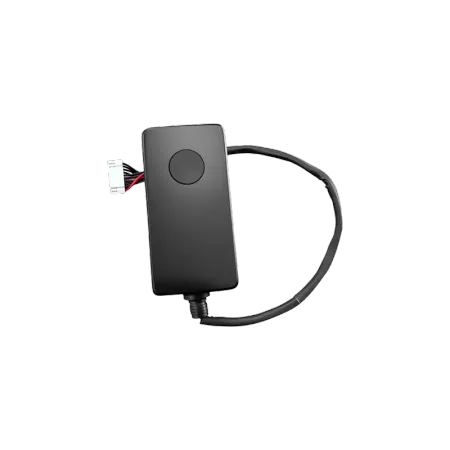
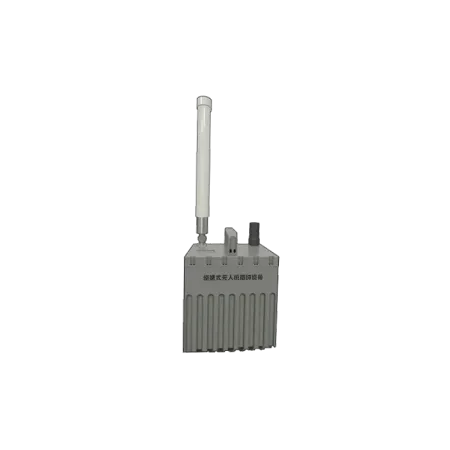

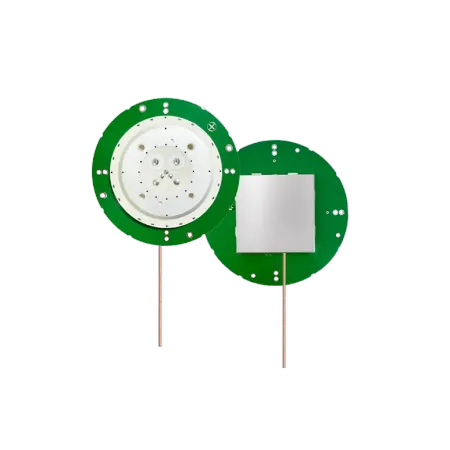
RTK GNSS Antenna
RTK GNSS Antenna
Frequently Asked Question
Do you have any question?
While the terms are often used interchangeably, GNSS (Global Navigation Satellite System) is the broader category. GPS is the specific system operated by the United States. A modern GPS antenna is almost always a GNSS antenna, meaning it can receive signals from multiple constellations like GPS, Beidou, GLONASS, and Galileo for improved accuracy and reliability.
An external GPS antenna is necessary when the main device or receiver is located inside a metal enclosure, a vehicle cabin, or a building where it cannot get a clear view of the sky. An external antenna can be mounted in a location with optimal signal reception (like a vehicle's roof) and feed the clean signal to the receiver via a cable.
An active GPS antenna has a built-in low-noise amplifier (LNA) that boosts the satellite signal before sending it down the cable to the receiver. This is crucial for overcoming signal loss in long cable runs and is the standard for almost all modern vehicle and telematics applications. A passive antenna has no internal amplification.
The mounting location is critical. For the best performance, a GPS antenna must have a clear, 360-degree view of the sky. It should be mounted as far as possible from other antennas and sources of electronic noise to prevent interference and signal blockage, ensuring it can track the maximum number of satellites.
These refer to the different frequencies on which GPS satellites transmit. A standard consumer GPS antenna typically only receives the L1 band. A high-precision, multi-band antenna can receive L1, L2, and L5 signals, which allows the receiver to correct for atmospheric errors and achieve centimeter-level accuracy for applications like surveying and autonomous driving.
Not necessarily. You must ensure compatibility. The most important factors are the voltage requirement for an active GPS antenna (typically 3V or 5V) and the connector type (e.g., SMA, FAKRA). Using an antenna with the wrong voltage or connector can lead to poor performance or even damage the components.