

We Have The Best Solutions for Your Business
Precision Navigation Solutions for a Connected World
As a leading solution supplier integrating R&D, manufacturing, and sales, we offer a wide range of products including GNSS satellite antennas, positioning terminals, data communication products, and customized high-precision Beidou solutions. Our expertise spans measurement & monitoring, aerospace, communication time service, autonomous driving, mechanical control, intelligent transportation, driving tests, and training.
In my career, now spanning over a decade in the world of high-precision positioning, I've seen the same story play out countless times. A team develops a brilliant autonomous vehicle or a revolutionary mapping drone, only to be plagued by inconsistent, unreliable position data. The issue, almost invariably, traces back to their decision to treat the most critical component in their entire system as a commodity: the RTK GNSS receiver. They fail to understand that this component is not just a sensor; it is the very engine of truth for their entire operation.
The challenge that a professional RTK GNSS receiver is built to solve is immense. It must capture the faintest of signals, originating 20,000 km away, after they have been distorted by the Earth's atmosphere. It must then compare these signals against a correction stream from a base station and, in a matter of seconds, solve a complex set of mathematical equations to achieve a "fixed" solution. The algorithms and firmware required to do this reliably, especially in the face of multipath interference from nearby buildings, represent the pinnacle of positioning science. A lesser receiver will fail at this task, leaving you "floating" in decimeter-level uncertainty or, worse, giving you a false fix.
This is where the difference between a component and a true professional engine becomes starkly clear. A high-quality RTK GNSS receiver has a more advanced signal processing core and more sophisticated firmware. This allows it to get a fix faster, hold it more reliably under tree canopy, and reacquire it more quickly after a temporary outage. For a surveyor, this means less time waiting and more points collected per day. For a farmer, it means perfect, repeatable auto-steer performance. For a drone operator, it means data that is accurate and defensible.
Ultimately, every piece of data your system generates, every decision your autonomous vehicle makes, is based on the position calculated by this one component. You can't build a reliable, high-performance system on a foundation of uncertain data. That is why investing in a superior RTK GNSS receiver is not an expense; it is the most fundamental investment you can make in the integrity, efficiency, and success of your entire professional operation.
Featured Products
Collection about xyzgnss
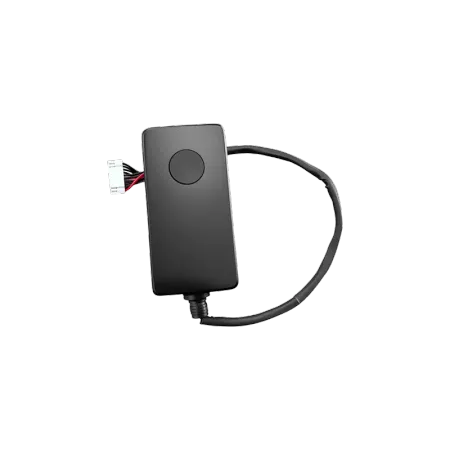
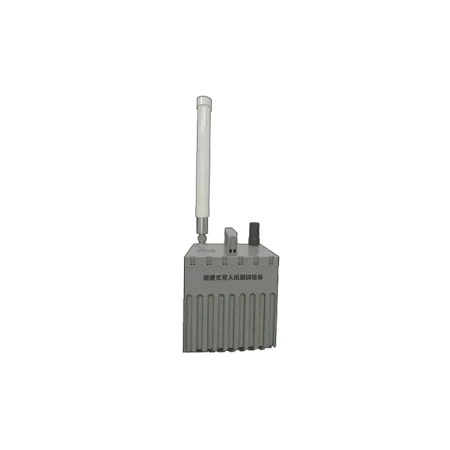
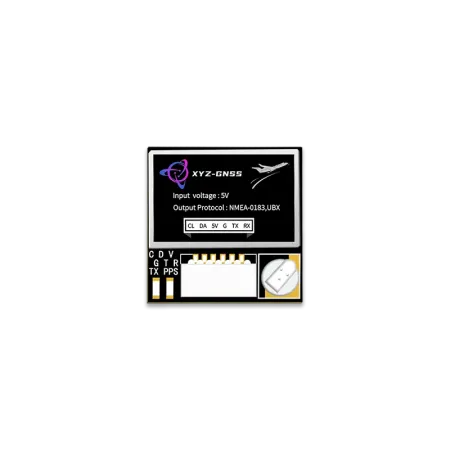
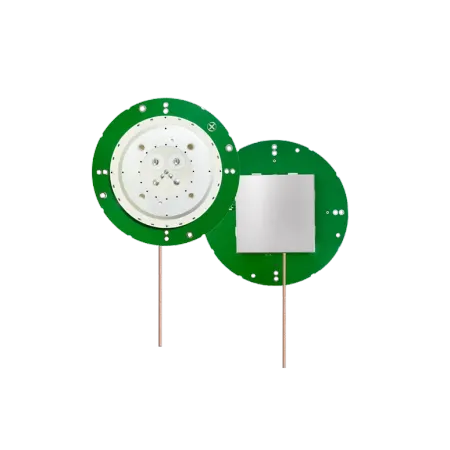
RTK GNSS Antenna
RTK GNSS Antenna
Frequently Asked Question
Do you have any question?
A standard GPS receiver can only determine its position to within a few meters. An RTK GNSS receiver uses a technique called differential positioning, applying corrections from a nearby base station to cancel out errors. This allows it to achieve centimeter-level accuracy, a thousand-fold improvement, which is essential for professional applications like surveying and machine control.
A complete RTK system requires a pair of compatible receivers. You need one RTK GNSS receiver acting as a stationary base station to calculate and transmit correction data. You then need a second unit in your mobile device (the rover) to receive these corrections and compute its precise position. A reliable data link (radio or internet) between the two is also required.
A multi-band RTK GNSS receiver is critical for fast, reliable performance. By receiving signals on multiple frequencies from the same satellites, it can directly measure and remove the largest source of GNSS error—the ionospheric delay. This allows it to achieve a centimeter-level "fix" in seconds, whereas older single-band systems could take many minutes or fail altogether.
Yes, absolutely. Instead of setting up your own base station, your RTK GNSS receiver (rover) can connect to a public CORS network via an NTRIP service over the internet. The receiver gets the same high-quality correction data, allowing it to achieve centimeter-level accuracy. This is a very efficient workflow for users operating over large areas with cellular coverage.
By itself, it cannot, as it relies on satellite signals. However, an advanced RTK GNSS receiver with Dead Reckoning (DR) or sensor fusion capabilities can be paired with an Inertial Measurement Unit (IMU). By tightly coupling the RTK and IMU data, the system can continue to provide an accurate position estimate by tracking the vehicle's movement until satellite signals are reacquired.
The terms are often used interchangeably. A "module" typically refers to the small OEM component that is soldered onto a larger circuit board. An "RTK GNSS receiver" can be a slightly broader term, sometimes referring to a complete, enclosed unit with connectors, but it is still fundamentally the electronic engine that performs the RTK calculations and is integrated into a larger system.