

We Have The Best Solutions for Your Business
Precision Navigation Solutions for a Connected World
As a leading solution supplier integrating R&D, manufacturing, and sales, we offer a wide range of products including GNSS satellite antennas, positioning terminals, data communication products, and customized high-precision Beidou solutions. Our expertise spans measurement & monitoring, aerospace, communication time service, autonomous driving, mechanical control, intelligent transportation, driving tests, and training.
In my career in high-precision GNSS, which now spans over a decade, I've seen countless technologies promise revolutionary accuracy. Yet, one design has remained the undisputed champion for truly critical applications: the choke ring antenna. For professionals who deal in millimeters, who monitor the slow, inexorable creep of tectonic plates or the subtle deformation of a dam, there is no substitute. We can have the most advanced receiver in the world, but if the signal it receives is contaminated by multipath, the data is compromised. The choke ring is our ultimate guardian of that signal's purity.
I often describe the function of a choke ring antenna to clients as an elegant, passive defense system. Imagine the central antenna element is a castle keep, and the concentric rings are a series of deep, impassable moats. The legitimate satellite signals are like allies arriving from high above, flying over the moats with ease. But the enemy—the reflected, corrupting multipath signals—is a ground army, arriving at a low angle. These signals get trapped in the choke rings and are dissipated before they can ever reach the keep. This physical, fundamental approach to rejecting interference is why the choke ring antenna has been trusted for decades.
This isn't just about getting a "better" signal; it's about establishing a foundation of truth. When you establish a CORS network that will serve as the geodetic backbone for an entire region, you need unwavering stability and repeatability for years, even decades. You need a phase center that doesn't wander. This is the domain where the choke ring antenna is not just an option, but a professional requirement. It's the difference between a good measurement and a legally and scientifically defensible one.
At the end of the day, our clients aren't buying a piece of hardware; they are buying certainty. They are buying the confidence that their data is as close to the absolute ground truth as modern technology can get. In my experience, no other piece of equipment embodies that commitment to certainty more completely than a well-engineered choke ring antenna. It is, and remains, the gold standard for those who cannot afford to be wrong.
Featured Products
Collection about xyzgnss
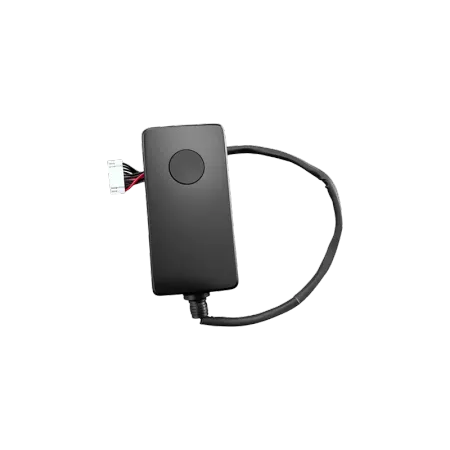
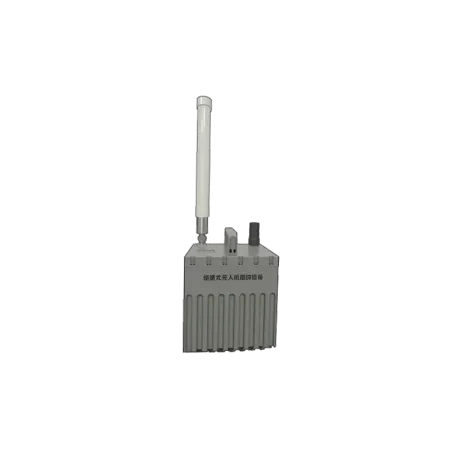
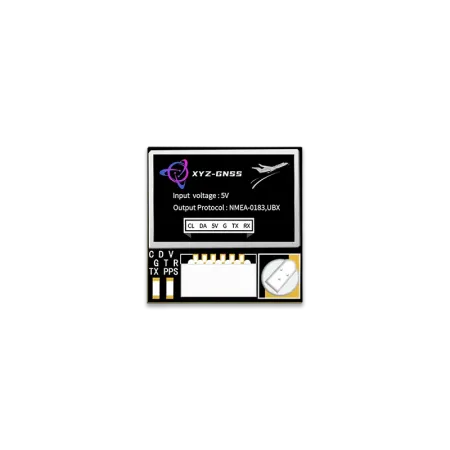
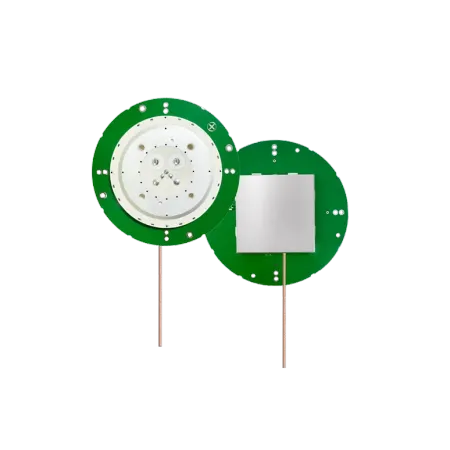
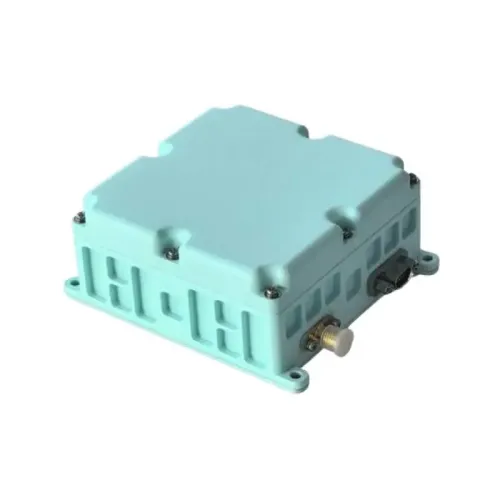
RTK GNSS Antenna
RTK GNSS Antenna
Frequently Asked Question
Do you have any question?
The primary function of a choke ring antenna is to provide superior rejection of multipath signals. Multipath occurs when GNSS signals bounce off surfaces like the ground, buildings, or vehicles before reaching the antenna. These reflected signals corrupt the measurement, and the concentric rings of the antenna are designed to suppress this interference, ensuring only direct, line-of-sight signals are processed.
The conductive rings on a choke ring antenna act as a waveguide that traps and dissipates low-elevation-angle signals. They create a high-impedance surface for horizontally polarized waves, which are characteristic of reflected signals, effectively preventing them from reaching the antenna element. This allows the antenna to focus exclusively on the clean, circularly polarized signals coming directly from the GNSS satellites above.
A choke ring antenna is essential for applications where millimeter-level accuracy and long-term stability are non-negotiable. This includes Continuously Operating Reference Stations (CORS), scientific research like tectonic plate monitoring, structural deformation monitoring (dams, bridges), and high-order geodetic control networks.
The phase center is the precise electronic point in the antenna where the measurement is made. A stable phase center means this point remains consistent across different satellite elevations and frequencies. The design of a choke ring antenna ensures this stability, which is absolutely critical for eliminating errors and achieving the highest levels of repeatable accuracy.
For the specific task of multipath rejection, a choke ring antenna is widely considered the gold standard and generally outperforms other geodetic antenna designs. While other high-quality antennas exist, the choke ring's physical design provides a level of multipath mitigation that is difficult to achieve through other means, making it the preferred choice for permanent, high-precision installations.
While technically possible, the size and weight of a traditional choke ring antenna make it impractical for most mobile applications like vehicle or drone navigation. They are specifically designed and optimized for stationary, long-term deployments where performance is prioritized over portability.