

We Have The Best Solutions for Your Business
Precision Navigation Solutions for a Connected World
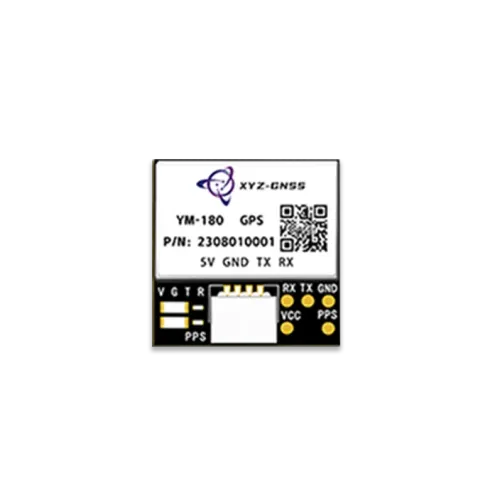
As a leading solution supplier integrating R&D, manufacturing, and sales, we offer a wide range of products including GNSS satellite antennas, positioning terminals, data communication products, and customized high-precision Beidou solutions. Our expertise spans measurement & monitoring, aerospace, communication time service, autonomous driving, mechanical control, intelligent transportation, driving tests, and training.
After more than a decade in this industry, I’ve seen brilliant products fail for the simplest of reasons. I've seen sophisticated fleet management platforms crippled by inconsistent data and innovative IoT devices returned by frustrated customers. The culprit, time and time again, is a component that many engineers treat as a simple commodity: the GPS module. They look at a spec sheet, see a low price, and assume all modules are created equal. In the real world, nothing could be further from the truth.
A professional-grade GPS module is a world away from the cheap components found in consumer gadgets. The difference lies in the details that don't always make it to the top of the spec sheet. It's in the quality of the RF front-end filtering, which determines how well the module can "hear" the faint satellite signals in a noisy electronic environment. It's in the sophistication of the firmware, which governs how intelligently the module can reject multipath signals and how quickly it can reacquire a lock after emerging from a tunnel. This is the unseen engineering that separates a reliable industrial tool from a frustrating toy.
In my experience, choosing a GPS module is not a procurement decision; it's a strategic one. It's about understanding that the integrity of your entire data stream starts here. For example, a module with multi-constellation support isn't a luxury; it's a fundamental requirement for achieving reliable performance in a city where buildings block large parts of the sky. A module with dead-reckoning capabilities isn't just a feature; it's the technology that ensures your vehicle tracker provides a seamless, uninterrupted track through a complex urban grid.
Ultimately, the module is the heart of your product's location awareness. A weak heart means a weak product. Investing in a robust, well-engineered GPS module from a specialist provider is the single most important decision you can make to ensure your product is reliable, your data is accurate, and your customers are satisfied. It's the unseen engine that will either power your success or become your single point of failure.
Featured Products
Collection about xyzgnss
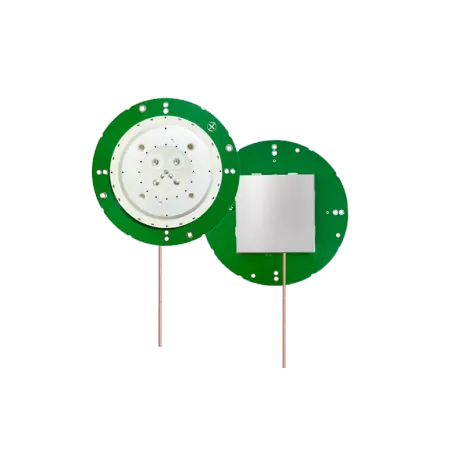
RTK GNSS Antenna
RTK GNSS Antenna
Frequently Asked Question
Do you have any question?
A GPS module is a self-contained receiver circuit that integrates all the core components needed to determine a geographic position. This typically includes a GNSS chipset (the "brain"), a radio frequency (RF) front-end to receive satellite signals, a temperature-controlled crystal oscillator (TCXO) for stable timing, and memory to store firmware and satellite almanac data, all on a single small circuit board.
The terms are often used interchangeably, but a GPS module is typically the OEM component that gets integrated into a larger product. A "GPS receiver" can refer to the module itself or to the entire end-user device (like a handheld GPS unit). In the B2B engineering world, we almost always refer to the component as a module.
A multi-constellation GPS module can track satellites from multiple global navigation systems simultaneously, not just the US-based GPS. This includes Russia's GLONASS, China's Beidou, and Europe's Galileo. This capability dramatically increases the number of visible satellites, resulting in faster position fixes, higher accuracy, and more reliable performance in challenging environments like urban canyons.
Time to First Fix (TTFF) is the time it takes for a GPS module to acquire satellite signals and calculate its initial position after being powered on. A low TTFF is critical for user experience in applications like vehicle navigation or fitness trackers. Features like Assisted-GNSS (A-GNSS), which uses cellular data to get a head start on satellite locations, help high-quality modules achieve this.