

We Have The Best Solutions for Your Business
Precision Navigation Solutions for a Connected World
As a leading solution supplier integrating R&D, manufacturing, and sales, we offer a wide range of products including GNSS satellite antennas, positioning terminals, data communication products, and customized high-precision Beidou solutions. Our expertise spans measurement & monitoring, aerospace, communication time service, autonomous driving, mechanical control, intelligent transportation, driving tests, and training.
In my decade-plus career in RF and positioning systems, I've seen more product development cycles derailed by one component than any other: the internal antenna. The appeal is obvious. It promises a smaller, sleeker, cheaper product. But what many engineers discover too late is that an internal antenna isn't just a component you solder to a board; it's an integral part of a complex, living RF system that you must design around with meticulous care. The laws of physics are unforgiving inside a compact electronic device.
The fundamental challenge is that you are asking a highly sensitive listening device to live in the middle of a rock concert. The "noise" from processors, displays, and power supplies can easily drown out the whisper-faint signals from GNSS satellites. Unlike an external antenna, which has the advantage of distance and physical separation, an internal antenna is right in the thick of it. Success depends entirely on a disciplined approach to PCB layout: creating a "quiet zone" or "keep-out area" around the antenna, providing a large and correctly shaped ground plane, and carefully routing traces to avoid interference.
This is where true expertise makes the difference. It's less about the antenna itself and more about the science of its implementation. We don't just sell an internal antenna; we provide the critical guidance needed to make it work. We've seen hundreds of designs and we know what works. We provide detailed application notes and reference designs that help our clients avoid the common pitfalls that lead to costly and time-consuming board re-spins. We help them tame the chaos inside their device to create a quiet space where the antenna can actually do its job effectively.
Ultimately, choosing to use an internal antenna is a decision to engage in a more advanced level of RF design. It’s not a shortcut. But when executed correctly, with expert partnership, it results in a truly optimized and elegant product. It's a decision that, more than any other, defines the ultimate reliability of your product in the field.
Featured Products
Collection about xyzgnss
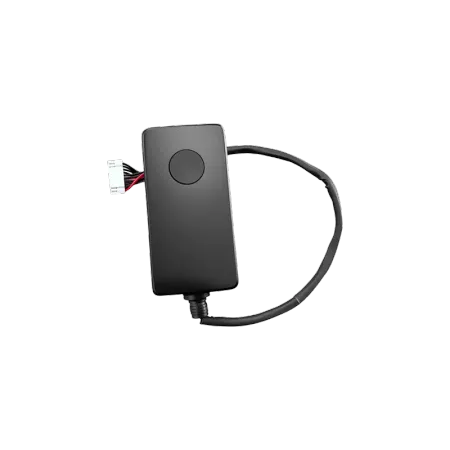
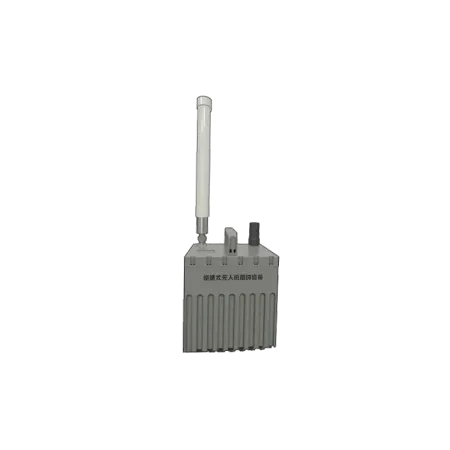

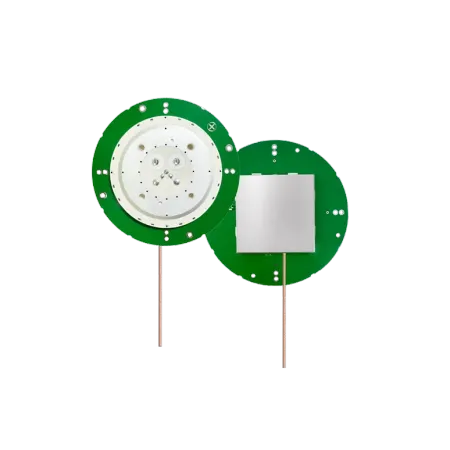
RTK GNSS Antenna
RTK GNSS Antenna
Frequently Asked Question
Do you have any question?
The two most common types of GNSS internal antenna are the ceramic patch antenna and the chip antenna. A ceramic patch is a small square of ceramic material with a metallic coating, known for its good performance and directionality. A chip antenna is an even smaller, surface-mount component, ideal for the most space-constrained designs, though often with a trade-off in performance.
The biggest challenges are managing RF interference and proper ground plane design. An internal antenna is in close proximity to noisy components like processors and cellular modems, which can "deafen" it. It also relies heavily on the PCB's ground plane to function correctly; an improperly designed ground plane will cripple its performance.
A ground plane is a large area of copper on the PCB that is connected to the circuit's ground. For an internal antenna like a patch, the ground plane acts as the other half of the antenna system. Its size and the antenna's position on it are critical. An undersized or poorly placed ground plane will result in a detuned antenna with very poor signal reception.
You should choose an internal antenna when product aesthetics, size, cost, and protection from vandalism or the environment are the top priorities. It's ideal for consumer electronics, wearables, and asset trackers that need to be small and self-contained. An external antenna is better when absolute top-tier performance is required, or when the device is enclosed in a metal case.