

We Have The Best Solutions for Your Business
Precision Navigation Solutions for a Connected World
As a leading solution supplier integrating R&D, manufacturing, and sales, we offer a wide range of products including GNSS satellite antennas, positioning terminals, data communication products, and customized high-precision Beidou solutions. Our expertise spans measurement & monitoring, aerospace, communication time service, autonomous driving, mechanical control, intelligent transportation, driving tests, and training.
In my career, now spanning over a decade in the precision GNSS industry, I’ve seen the world become completely dependent on a silent, invisible utility: synchronized time. The entire global financial market, the 5G network that connects our lives, the stability of the power grid—it all relies on every component marching to the same nanosecond beat. I’ve consulted on complex network failures where teams spent weeks troubleshooting multi-million dollar switches, only to find the root cause was a cheap, unstable, twenty-dollar GPS antenna. The heartbeat of their entire network was erratic because they neglected the most critical component: the timing antenna.
We must be clear: a timing antenna is not the same as a navigation antenna. A navigation antenna is built for speed, to get a fast position fix. A timing antenna is a scientific instrument built for one thing: unwavering stability. Its job is to be the perfect, silent microphone, flawlessly capturing the rhythm of atomic clocks in orbit and delivering it without a single shred of distortion. This requires a completely different engineering philosophy. It’s a design obsessed with rejecting the subtle signal echoes (multipath) that cause nanosecond-level jitter and maintaining a rock-solid phase center that won't wander with the morning sun or the evening chill.
This obsession with stability is why a professional-grade timing antenna is so critical. For a 5G base station, timing jitter can lead to dropped calls and data corruption. For a financial firm, an unstable time source can mean falling out of compliance with strict regulations like MiFID II, which mandate traceable, high-precision timestamps on every single transaction. The signal from the antenna is the source of this legal and operational truth. If the source is corrupted, the entire chain of evidence is broken. The stakes are immense, and they all trace back to the quality of this one component.
So, when my clients are designing or upgrading their critical infrastructure, I always start the conversation in the same place: on the rooftop. We talk about the integrity of their time source, which begins and ends with the quality of the hardware capturing it. An investment in a high-performance timing antenna is not an IT expense; it's a fundamental investment in the reliability, compliance, and resilience of their entire operation. It is, quite simply, the most important heartbeat they will ever monitor.
Featured Products
Collection about xyzgnss
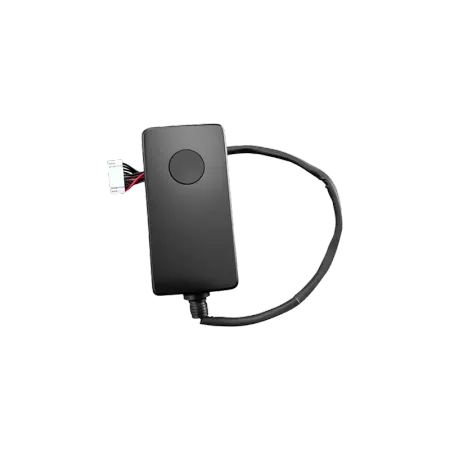
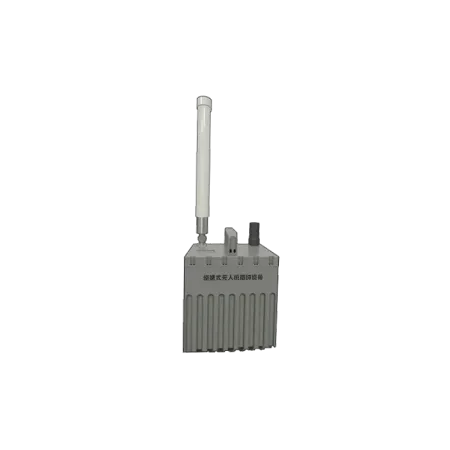
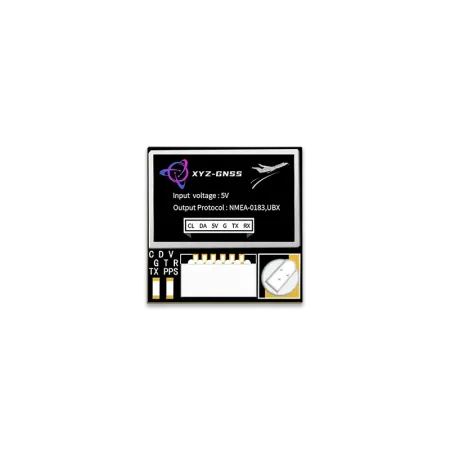
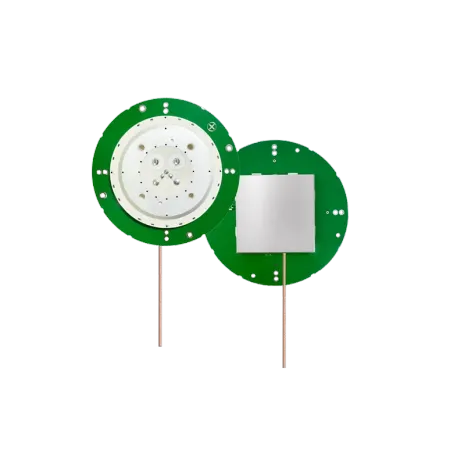
RTK GNSS Antenna
RTK GNSS Antenna
Frequently Asked Question
Do you have any question?
A timing antenna is a specialized GNSS antenna designed specifically to provide a highly stable and reliable signal for network synchronization (NTP/PTP) and frequency reference. While a regular GPS antenna is optimized for fast position calculation, a timing antenna is engineered for exceptional phase center stability and multipath rejection to minimize timing jitter and ensure a consistent, pure signal to the clock.
Even though a timing antenna is stationary, GNSS signals can bounce off nearby buildings, the ground, or other structures before reaching it. This "multipath" interference creates timing errors, known as jitter, that can degrade the stability of your entire network clock. A high-quality timing antenna is designed to physically and electronically reject these reflected signals, preserving the purity of the direct signal.
Any application that depends on precise, traceable time requires a professional timing antenna. This includes telecommunications (especially 5G base stations), financial institutions that must comply with regulations like MiFID II for timestamping trades, power grid management systems, broadcast media, and corporate data centers that rely on NTP/PTP for network stability and accurate logging.
The phase center is the precise electronic point inside the antenna where the signal measurement is made. For a timing antenna, it is absolutely critical that this point remains stable over time and with changes in temperature. An unstable phase center will introduce tiny variations in the signal's path length, which translates directly into timing errors or "wander," undermining the long-term stability of the network clock it serves.
A Stratum 1 time source is a clock that is directly synchronized to a primary reference, like the atomic clocks in GNSS satellites. The timing antenna is the crucial first component that captures this reference signal from the satellites. By providing a clean, stable signal to a GNSS-disciplined clock or server, it enables that device to become an authoritative Stratum 1 NTP or PTP grandmaster for the entire local network.
Yes. As networks become more critical, protecting the time source from intentional jamming is a growing concern. An anti-jamming antenna, which uses advanced techniques to nullify interfering signals, is a specialized type of timing antenna. Deploying an anti-jamming solution is the most robust method to ensure your network's time source remains available and trustworthy, even in a contested RF environment.