

We Have The Best Solutions for Your Business
Precision Navigation Solutions for a Connected World
As a leading solution supplier integrating R&D, manufacturing, and sales, we offer a wide range of products including GNSS satellite antennas, positioning terminals, data communication products, and customized high-precision Beidou solutions. Our expertise spans measurement & monitoring, aerospace, communication time service, autonomous driving, mechanical control, intelligent transportation, driving tests, and training.
In my career spanning more than a decade in this field, I've had a front-row seat as positioning technology has reshaped our world. I've seen it guide tractors with sub-inch precision and enable fleets of drones to map entire landscapes. And at the heart of every single one of these revolutionary applications is the unsung hero of the system: the GPS receiver. Too often, people focus on the antenna or the software platform, but as any seasoned engineer knows, the receiver is the engine. It's where the raw, chaotic radio waves from space are forged into the hard, reliable data of a position on Earth.
The mistake many newcomers make is viewing the GPS receiver as a commodity. They compare chipsets and prices, assuming they're all doing the same simple math. But the performance of a professional-grade receiver is defined by its firmware and its signal processing algorithms—the "secret sauce." This is what allows it to perform the magic of integer ambiguity resolution for an RTK fix, or to intelligently filter out the reflected multipath signals that plague urban environments. A cheap receiver is easily confused by these challenges, leading to position jumps and inaccurate data. A truly robust GPS receiver, however, has a powerful processing engine that can discern the true signal from the noise, delivering a clean and stable track you can bet your business on.
This difference is everything in the B2B world. For a telematics company, it's the difference between a clean, logical trip report and a messy, jagged line that requires manual correction. For an autonomous system, it's the difference between confident navigation and a critical positioning failure. This is why we focus so intently on the entire system—from the RF front-end to the final NMEA output. We know that our clients aren't just buying a component; they're buying the trust that the data coming out of that GPS receiver is as close to the absolute truth as technology can provide.
Ultimately, choosing a GPS receiver is a strategic decision about data integrity. It’s an investment in the quality of the information that powers your entire service or operation. In an era where location data is the new oil, the receiver is the refinery. And in my experience, you can't afford to use anything but the best.
Featured Products
Collection about xyzgnss
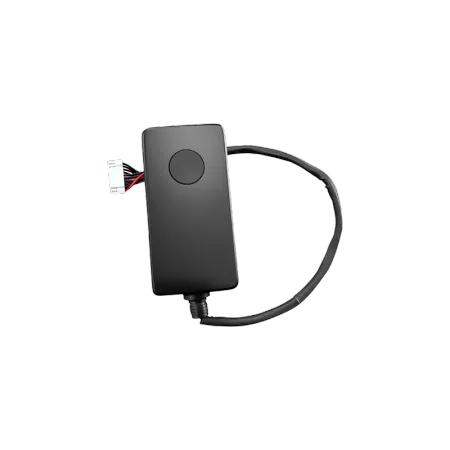
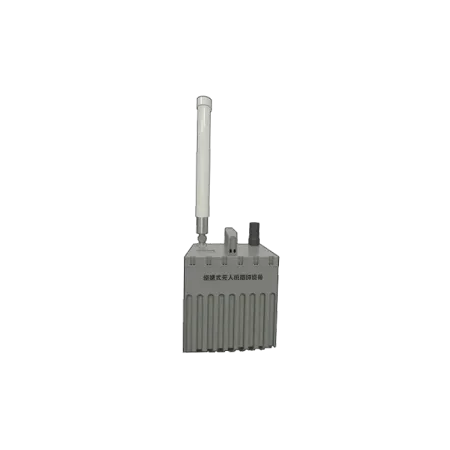
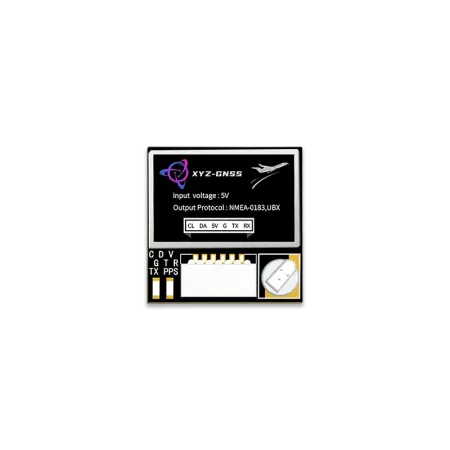
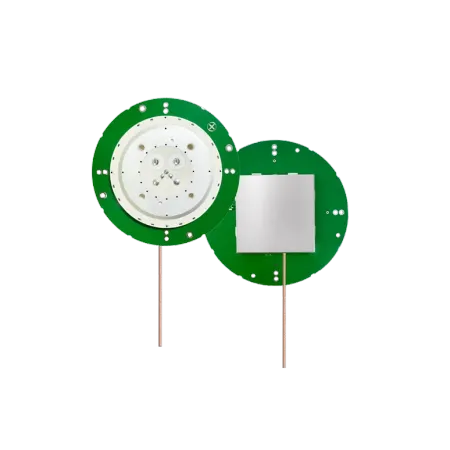
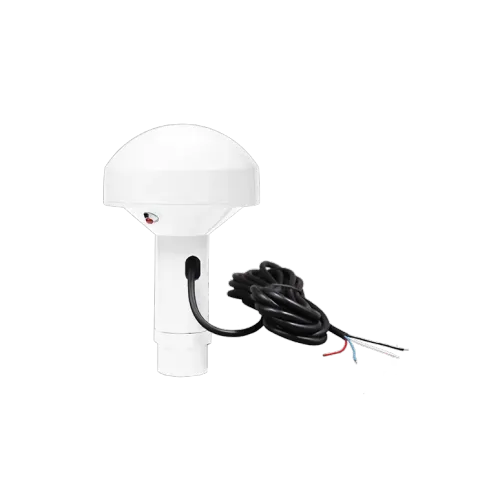
RTK GNSS Antenna
RTK GNSS Antenna
Frequently Asked Question
Do you have any question?
A GPS receiver is the electronic engine that processes satellite signals to calculate a position. The antenna is the separate component that physically captures the radio waves from the satellites and feeds them to the receiver. Think of it like a radio: the antenna picks up the station, but the receiver inside is what decodes the signal into music. They must work together, but they are two distinct parts of the system.
GPS is the specific satellite constellation operated by the U.S. government. GNSS (Global Navigation Satellite System) is the general term for all satellite positioning systems, including Russia's GLONASS, China's Beidou, and Europe's Galileo. A modern, high-performance GPS receiver is almost always a GNSS receiver, meaning it can use signals from multiple constellations at once for a faster, more accurate, and more reliable position.
A multi-band (e.g., L1/L2 or L1/L5) GPS receiver can process signals on multiple different frequencies from the same satellite. This advanced capability allows it to identify and correct for a major source of error called ionospheric delay. This is the core technology that enables RTK (Real-Time Kinematic) and achieves centimeter-level accuracy, making it essential for surveying, drones, and precision agriculture.
TTFF is the time it takes for a GPS receiver to calculate its first position after it's turned on. A "cold start" (with no prior data) can take a minute or more. A fast TTFF is critical for a good user experience. High-quality receivers use features like A-GNSS (Assisted GNSS) to download satellite data over the internet, allowing for a "hot start" that takes only a few seconds.