


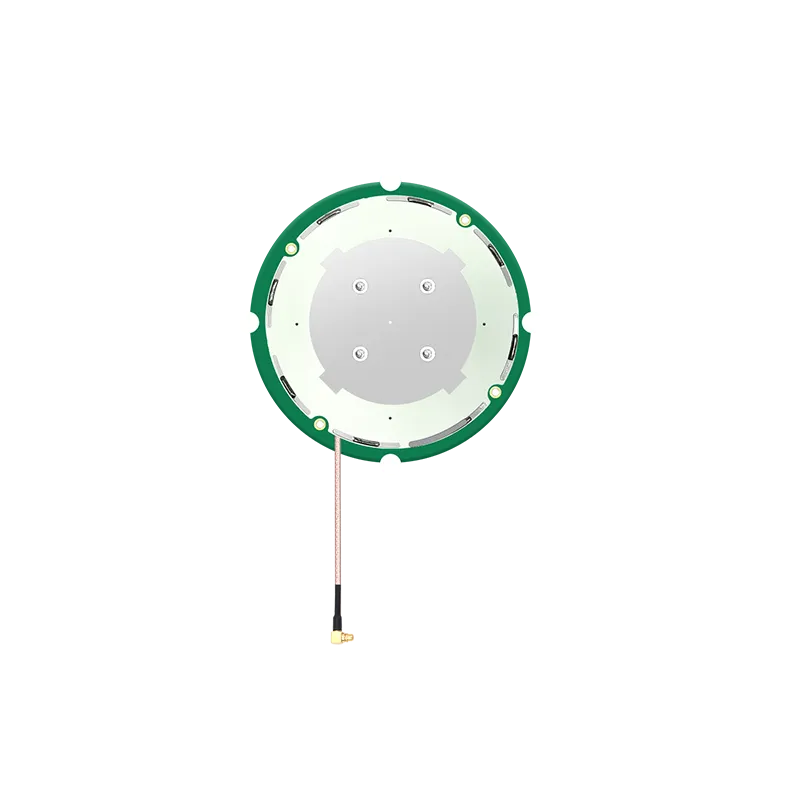
In the rapidly evolving landscape of autonomous systems and high-precision positioning, the demand for centimeter-level accuracy has transitioned from a specialized requirement to an industry standard. At the heart of this revolution lies the RTK GNSS antenna OEM module. Unlike standard consumer-grade GPS components, these integrated solutions combine the complex processing power of Real-Time Kinematic (RTK) technology with the physical reception capabilities of high-gain antennas. For engineers and system integrators, selecting the right module is not merely about signal reception; it is about ensuring reliability in challenging environments where multipath interference and signal blockages are common. As industries like precision agriculture and unmanned aerial vehicles (UAV) continue to scale, understanding the nuances of these modules becomes critical for developing competitive hardware products.
The integration of an RTK GNSS antenna OEM module allows manufacturers to bypass the complexities of discrete RF design. Traditionally, designing an antenna circuit required extensive knowledge of impedance matching, noise figure optimization, and electromagnetic interference (EMI) shielding. By utilizing an Original Equipment Manufacturer (OEM) module, companies can leverage pre-optimized hardware that has already been tuned for specific GNSS constellations, including GPS, BDS, GLONASS, and GALILEO. This guide explores the technical foundations of these modules, providing professional insights into how they can be effectively integrated into modern industrial platforms to achieve unparalleled positioning performance.
Understanding the technical architecture of an RTK GNSS antenna OEM module
The architecture of a high-quality RTK GNSS antenna OEM module is a marvel of miniaturized engineering. It typically consists of a ceramic patch antenna or a helix antenna element, followed by a multi-stage Low Noise Amplifier (LNA) and a high-performance GNSS chipset. The primary function of the RTK algorithm within the module is to process the carrier phase of the satellite signal, rather than just the code phase. This allows the system to resolve the integer ambiguity and calculate a position with centimeter-level precision. When selecting a module, technical experts must look for multi-band support, specifically the L1, L2, and L5 frequencies. Multi-band capability is essential because it allows the module to correct for ionospheric delays more effectively, resulting in faster "fix" times—often referred to as Time To First Fix (TTFF).
Beyond the internal chipset, the physical design of the antenna element plays a pivotal role. For instance, in mobile robotics, a module with a high-gain ceramic patch is often preferred due to its low profile and stability. However, for handheld devices or aerial applications where the orientation of the receiver might change, a quadrifilar helix antenna design integrated into the OEM module might be more appropriate. These modules also incorporate advanced filtering techniques, such as Surface Acoustic Wave (SAW) filters, to reject out-of-band interference from cellular networks or other radio equipment. This level of integrated protection ensures that the RTK GNSS antenna OEM module maintains its high-precision lock even in RF-congested urban environments or near high-voltage power lines in industrial settings.
Strategic integration of the RTK GNSS antenna OEM module in unmanned systems
Integrating an RTK GNSS antenna OEM module into an existing hardware ecosystem requires careful consideration of the physical environment and the electrical interface. One of the most significant challenges is the ground plane effect. For ceramic patch-based OEM modules, the size and shape of the PCB ground plane can significantly alter the antenna's radiation pattern and resonant frequency. Engineers must follow strict layout guidelines provided by the manufacturer to ensure that the module performs as expected. This often involves placing the module at the highest possible point on the chassis to minimize signal obstruction and multipath reflections from the body of the vehicle or robot.
Communication interfaces are another critical factor. Most professional RTK modules utilize UART, USB, or I2C interfaces to communicate with the host processor. When designing the data link, it is vital to ensure that the bandwidth is sufficient to handle the high-rate NMEA or binary data output, especially when the module is configured to update at 10Hz or 20Hz. Furthermore, since RTK requires a constant stream of correction data (usually via RTCM protocol), the system must have a reliable secondary communication link, such as 4G LTE or a long-range radio modem. The seamless marriage of the RTK GNSS antenna OEM module with these external data streams is what ultimately determines the success of the high-precision navigation system in real-world scenarios.
Industrial applications: from precision agriculture to geodetic surveying
The versatility of the RTK GNSS antenna OEM module makes it indispensable across various industrial sectors. In precision agriculture, these modules are integrated into automated steering systems for tractors and harvesters. By maintaining a centimeter-level path, farmers can reduce overlap during seeding and spraying, which leads to significant savings in fuel and chemical costs. The ability of the module to work across multiple constellations ensures that the machinery remains operational even in valleys or near dense treelines where signal visibility might be limited. The ruggedized nature of these modules also ensures they can withstand the vibration and thermal fluctuations common in heavy machinery operations.
In the field of geodetic surveying and infrastructure monitoring, the RTK GNSS antenna OEM module enables the creation of lightweight, portable mapping tools. Surveyors can now carry high-precision equipment in a backpack or mounted on a small pole, replacing the bulky and expensive equipment of the past. Similarly, for structural health monitoring, these modules can be permanently installed on bridges, dams, or skyscrapers to detect minute movements or deformations over time. The high sensitivity and phase stability of the integrated antenna ensure that even the slightest millimeter-level shifts are captured, providing essential data for public safety and engineering analysis. As we look toward the future, the integration of these modules into smart city infrastructure will likely facilitate the next generation of intelligent transportation systems.
Yonghao: your professional partner for RTK GNSS antenna OEM module solutions
Yonghao has established itself as a leading innovator in the field of high-precision satellite navigation. We specialize in the research, development, and manufacturing of professional GNSS solutions that cater to the demanding needs of global industrial clients. Our product portfolio is built on the foundation of reliability, precision, and ease of integration. By choosing a Yonghao RTK GNSS antenna OEM module, you are gaining access to years of RF expertise and cutting-edge PNT (Positioning, Navigation, and Timing) technology.
Our commitment to excellence is reflected in our diverse product line. For projects requiring compact form factors without compromising on performance, our RTK GNSS antenna OEM module YM-251Q offers an exceptional balance of sensitivity and power efficiency. For more advanced aerial platforms, we provide the YM-450Q, designed specifically to meet the rigorous demands of UAV navigation and mapping. We also offer specialized hardware such as the UM980 high-precision board and various anti-jamming devices to ensure operational continuity in hostile signal environments. At Yonghao, we don't just sell components; we provide the technological backbone that allows your innovations to navigate the world with confidence.
Conclusion
The journey toward full autonomy and digital transformation in industry is paved with the need for precise data. The RTK GNSS antenna OEM module serves as the fundamental sensor that bridges the physical and digital worlds, providing the spatial awareness necessary for robots, drones, and machinery to operate safely and efficiently. By understanding the technical requirements of these modules—from frequency bands to integration strategies—manufacturers can unlock new levels of performance in their products. As technology progresses, Yonghao remains dedicated to pushing the boundaries of what is possible, ensuring that high-precision positioning is accessible, reliable, and ready for the challenges of tomorrow.
Ready to elevate your project with centimeter-level precision? Contact our technical team today for a consultation on the best solution for your application.
Frequently Asked Questions
Q1: What are the primary benefits of using an RTK GNSS antenna OEM module in UAV design?
The primary benefit of using an RTK GNSS antenna OEM module in UAVs is the achievement of centimeter-level positioning and heading accuracy. This is crucial for applications like photogrammetry, where precise image geotagging reduces the need for ground control points. Yonghao modules, such as the YM-450Q, are specifically optimized to provide high-gain reception while maintaining a light weight, which is essential for extending drone flight times and stability.
Q2: How does an RTK GNSS antenna OEM module handle signal interference in urban areas?
A professional RTK GNSS antenna OEM module handles interference through a combination of multi-constellation support and advanced internal filtering. By tracking GPS, BDS, GLONASS, and GALILEO simultaneously, the module ensures there are always enough satellites in view. Additionally, Yonghao incorporates high-quality LNA and SAW filters to mitigate the impact of electromagnetic noise, ensuring a stable RTK fix even in dense urban canyons.
Q3: Can the RTK GNSS antenna OEM module be customized for specific industrial requirements?
Yes, at Yonghao, we understand that different industries have unique needs. We offer extensive customization services for our RTK GNSS antenna OEM module range, including adjustments to cable lengths, connector types, and antenna gain profiles. This flexibility allows our clients to integrate our modules seamlessly into diverse hardware platforms, ranging from marine vessels to small-scale robotic lawnmowers.
Q4: What is the typical power consumption of a high-performance RTK GNSS antenna OEM module?
Power consumption is a critical factor for battery-operated devices. A modern RTK GNSS antenna OEM module is designed for high efficiency, typically consuming between 100mW and 300mW during active tracking and RTK processing. Yonghao focus on low-power circuit design ensures that our modules provide top-tier precision without significantly draining the power reserves of portable or autonomous equipment.
Q5: How difficult is the initial setup of an RTK GNSS antenna OEM module for a new user?
The setup of an RTK GNSS antenna OEM module is streamlined through standard communication protocols like NMEA and RTCM. For new users, Yonghao provides comprehensive technical support and documentation. Our modules are designed to be "plug-and-play" to a large extent, requiring only a power supply, a clear view of the sky, and a source of RTK corrections to begin delivering high-precision coordinates within seconds.