


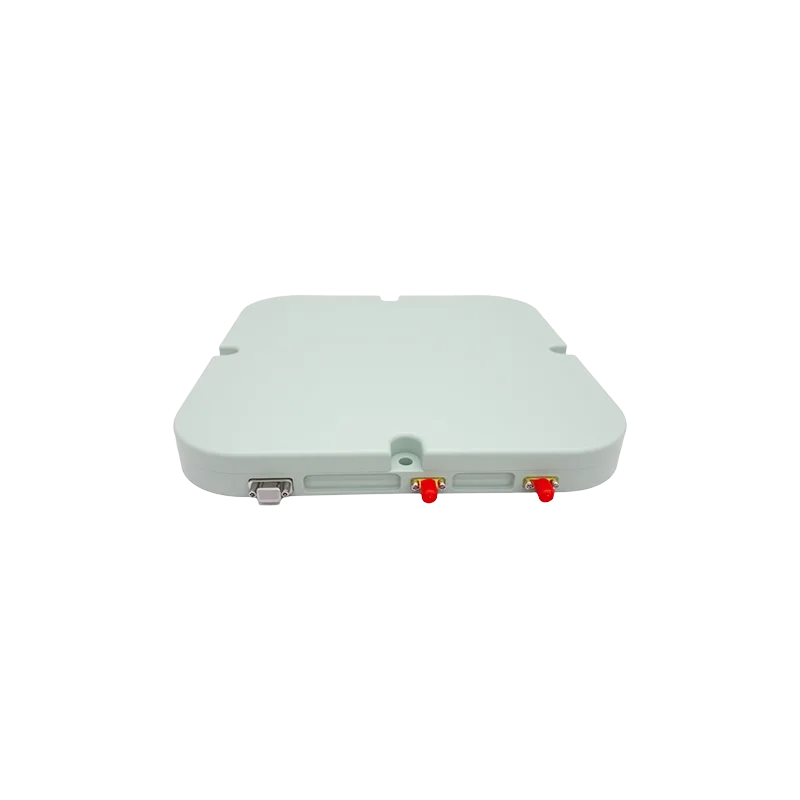
An Anti-jamming Antenna is what keeps a GNSS receiver working in a contested or congested RF environment, and adaptive filtering is the technique that makes the difference between a serious Anti-jamming Antenna and a generic GNSS antenna with a marketing label. While a fixed nulling antenna can only reject interference from a known direction, an Anti-jamming Antenna with adaptive filtering continuously re-shapes its gain pattern to put nulls on whatever interference source is currently active. This guide walks through what adaptive filtering actually does, why it matters for both jamming and spoofing defense, and the design choices that determine whether an Anti-jamming Antenna holds up under real-world threats.
If you are a defense system architect, a critical-infrastructure engineer, or a system integrator about to spec an Anti-jamming Antenna for a serious deployment, the goal of this article is to give you a working framework for evaluating adaptive filtering, comparing architectures, and matching the part to the threat model of your program. We will not push a single architecture, because no Anti-jamming Antenna fits every threat. What we will do is walk through the criteria that actually matter when the receiver has to keep working.
What Adaptive Filtering Actually Does in an Anti-Jamming Antenna
An Anti-jamming Antenna with adaptive filtering uses a multi-element array and a digital beamformer to continuously re-shape its gain pattern. The beamformer estimates the direction of arrival and the power of each interference source in the environment, and it places a null in the gain pattern at each interference direction while preserving gain toward the satellites above. As the interference sources move, switch on, or switch off, the beamformer re-converges in milliseconds to maintain the nulling.
The simplest form of adaptive filtering is a least-mean-squares (LMS) algorithm that minimizes the output power of the array under the constraint that the gain toward the satellites is preserved. More sophisticated algorithms use multiple-innovation filters, space-time adaptive processing (STAP), or compressed-sensing techniques to handle wideband jammers, multiple simultaneous threats, and fast-moving platforms. The choice of algorithm matters, but the most important number is the jamming-to-signal (J/S) ratio the Anti-jamming Antenna can defeat while still tracking the satellites.
Why Adaptive Filtering Drives Anti-Jamming Performance
An Anti-jamming Antenna with adaptive filtering is not just a more sophisticated version of a fixed-null antenna. It is a fundamentally different system, and the difference shows up in three operational effects.
Number of simultaneous threats. A fixed-null Anti-jamming Antenna can null one or two pre-determined directions. An adaptive Anti-jamming Antenna can null as many simultaneous threats as there are degrees of freedom in the array. A 4-element array can null 3 simultaneous jammers. A 7-element array can null 6. A 16-element array can null 15.
Response to moving threats. A fixed-null Anti-jamming Antenna has to be re-pointed when the threat moves, which is impractical against a swarm of small drones or a mobile jammer. An adaptive Anti-jamming Antenna re-converges in milliseconds to track the moving threat, which is what allows it to keep working against realistic threat scenarios.
Spoofing detection foundation. An adaptive Anti-jamming Antenna provides the direction-of-arrival information that is the foundation of any spoofing detection scheme. A spoofer that rebroadcasts a coherent GNSS-like signal from a single direction shows up as an anomalous direction of arrival that the beamformer can flag. Without the direction-of-arrival information from an adaptive array, spoofing detection has to rely on signal-power anomalies alone, which is much weaker.
Key Specifications of an Anti-Jamming Antenna With Adaptive Filtering
An Anti-jamming Antenna with adaptive filtering lives or dies by a small set of specifications. Reading a generic anti-jamming brochure without a framework is a recipe for buying the wrong product.
1. Number of elements and simultaneous nulls. An Anti-jamming Antenna should specify both the number of elements in the array and the number of simultaneous nulls it can place. A 4-element array with 3 simultaneous nulls is the entry point. A 7-element array with 6 nulls handles most civilian threats. A 16-element array with 15 nulls is the high-end defense and critical-infrastructure baseline.
2. Jamming-to-signal ratio. The J/S ratio is the single most important number on the Anti-jamming Antenna datasheet. A 70 dB J/S system handles consumer jammers at short range. A 90 dB or 100 dB J/S system handles military-grade threats. Below 50 dB, the Anti-jamming Antenna will not survive a real-world encounter. Always ask for the J/S ratio measured against a single narrowband jammer, against multiple simultaneous jammers, and against a wideband jammer.
3. Re-convergence time. When a jammer switches on or moves, the Anti-jamming Antenna has to re-null the array. A re-convergence time of 1 to 10 ms is the practical range for serious applications. A re-convergence time of 100 ms or more is acceptable for fixed-site deployments but problematic for mobile platforms. A re-convergence time of 1 second or more is not usable in any realistic threat scenario.
4. Frequency band coverage. An Anti-jamming Antenna that only covers L1 is no longer sufficient. A modern system should cover L1, L2, and L5 simultaneously, because the receiver can use the L5 signal as a spoofing-resistant backup when the L1 environment is contested. A multi-frequency Anti-jamming Antenna is more expensive but the BOM premium is small relative to the deployment value.
5. Power and form factor. A vehicle-mount or fixed-site Anti-jamming Antenna can draw 10 to 30 W. A man-portable or UAV-mount Anti-jamming Antenna has to fit in a 5 to 10 W envelope. The form factor drives the antenna element count, which in turn drives the null count, so a man-portable Anti-jamming Antenna will always have fewer simultaneous nulls than a fixed-site system.
How Anti-Jamming Antennas Use Adaptive Filtering Against Spoofing
An Anti-jamming Antenna with adaptive filtering is the foundation of any serious spoofing defense, but the spoofing detection logic has to live somewhere. The most common architecture pairs the Anti-jamming Antenna with a downstream receiver that runs the spoofing detection algorithms.
Direction-of-arrival consistency. A spoofer that rebroadcasts a coherent GNSS-like signal from a single direction shows up as an anomalous direction of arrival in the Anti-jamming Antenna. The beamformer can flag the inconsistency, and the downstream receiver can refuse to use the spoofed signal.
Signal power anomalies. A spoofer typically broadcasts a stronger signal than the real GNSS satellites, because it has to overcome the free-space path loss. The Anti-jamming Antenna can detect the power jump and flag the inconsistency, and the downstream receiver can fall back to the L5 signal as a spoofing-resistant reference.
Clock bias anomalies. A spoofer typically introduces a clock bias that the receiver can detect by comparing the spoofed signal to the time reported by an independent reference clock. The Anti-jamming Antenna does not directly detect the clock bias, but it provides the clean signal that the receiver needs to make the comparison.
Common Pitfalls in Anti-Jamming Antenna Selection
Across our Anti-jamming Antenna deployments, the same four mistakes show up more often than the others. Skim them before you commit to a BOM.
Underestimating the threat. Many programs spec an Anti-jamming Antenna for the threat they have seen, not the threat they are likely to face. A consumer-grade 50 dollar jammer is a far cry from a coordinated military threat, but the same Anti-jamming Antenna has to handle both. Plan for the worst case you can imagine, and then add a margin.
Forgetting the spoofing layer. An Anti-jamming Antenna handles jamming, not spoofing. Plan for the Anti-jamming Antenna to expose hooks for spoofing detection, or budget a downstream spoofing-detection module that consumes the direction-of-arrival information from the beamformer.
Mounting the array on a vibrating structure. An Anti-jamming Antenna relies on phase coherence across the antenna array. Vibration or mechanical flex can destroy the phase relationships the beamformer needs. Use a vibration-isolated mount, especially on vehicles and rotorcraft.
Treating the receiver as separate. An Anti-jamming Antenna is most effective when the receiver is tightly integrated with the beamformer. A standalone receiver bolted to a standalone Anti-jamming Antenna will not deliver the same performance as a single integrated system. If you are evaluating separate components, ask the vendor for an integrated reference design.
Where We Fit: xyzgnss Anti-Jamming Antenna Portfolio
At xyzgnss we have built our Anti-jamming Antenna portfolio around the same principle that drives the rest of our GNSS product line: tight adaptive filtering specifications, documented behavior, and reference designs that move from the bench to a deployed site without a re-engineering step. Our Anti-jamming Antenna family includes multi-element arrays for fixed-site and vehicle-mount applications, and tightly integrated receiver and beamformer pairs for OEM programs.
You can browse the Anti-jamming Antenna family on the product page, and read our field notes on Anti-jamming Antenna guide for a wider view of the trade-offs. For a hands-on reference, the YH163 four-channel anti-jamming system is a representative mid-range part for vehicle-mount applications, and the YH80 four-channel anti-jamming system is a representative compact part for man-portable deployments.
If you would like a sample Anti-jamming Antenna, a threat-modeling session, or a field test plan for your deployment, our technical team can walk you through the site survey, the calibration procedure, and the integration with the downstream receiver and spoofing-detection layer. We have supported critical-infrastructure, defense, and homeland-security customers across multiple regions, and we are happy to bring that field experience to your project.
Conclusion
Adaptive filtering is the technique that separates a serious Anti-jamming Antenna from a generic GNSS antenna, and the choice of array architecture, algorithm, and integration depth drives whether the receiver keeps working when the threat arrives. If you are evaluating an Anti-jamming Antenna for a new program, our engineering team can help you model the threat, compare the candidates, and validate the deployment in your real environment.
Need an Anti-jamming Antenna with adaptive filtering? Talk to our engineering team about a threat-modeling session, a reference design, and an evaluation kit. Contact xyzgnss to start a project →
Frequently Asked Questions
Q1: What Is an Anti-Jamming Antenna With Adaptive Filtering?
An Anti-jamming Antenna with adaptive filtering is a multi-element antenna array with a digital beamformer that continuously re-shapes its gain pattern to put nulls on whatever interference source is currently active. The adaptive filtering algorithm estimates the direction of arrival of each interference source in real time and updates the beamformer weights in milliseconds. A serious Anti-jamming Antenna with adaptive filtering can null multiple simultaneous jammers and respond to moving threats.
Q2: How Does Adaptive Filtering Differ From Fixed Nulling in an Anti-Jamming Antenna?
Fixed nulling in an Anti-jamming Antenna places a permanent null in a pre-determined direction, which is effective only against a known, stationary threat. Adaptive filtering continuously re-shapes the gain pattern to track the actual interference sources, which is effective against moving threats, switching threats, and multiple simultaneous threats. Adaptive filtering is the standard for any serious Anti-jamming Antenna deployment.
Q3: Can an Anti-Jamming Antenna With Adaptive Filtering Defeat Spoofing?
An Anti-jamming Antenna with adaptive filtering is the foundation of any serious spoofing defense, but the spoofing detection logic has to live in a downstream receiver. The Anti-jamming Antenna provides the direction-of-arrival information and the clean signal that the receiver needs to detect the inconsistencies in a spoofed signal. Without the Anti-jamming Antenna, spoofing detection has to rely on signal-power anomalies alone, which is much weaker.
Q4: How Many Simultaneous Jammers Can an Anti-Jamming Antenna With Adaptive Filtering Defeat?
The number of simultaneous jammers an Anti-jamming Antenna with adaptive filtering can defeat depends on the number of elements in the array. A 4-element array can null 3 jammers. A 7-element array can null 6. A 16-element array can null 15. The theoretical limit is the number of elements minus one, because one degree of freedom is reserved for the gain toward the satellites. In practice, the limit is slightly lower because of array imperfections.
Q5: Where Can I Get an Anti-Jamming Antenna With Adaptive Filtering?
We supply Anti-jamming Antennas with adaptive filtering for fixed-site, vehicle-mount, and man-portable deployments. Each antenna ships with a calibration report, a beamforming performance dataset, and integration hooks for downstream spoofing detection. Contact our engineering team and we can share the test report for the Anti-jamming Antenna you are evaluating, along with a sample antenna and a reference design.