


In the rapidly evolving landscape of modern transportation, the demand for absolute positioning accuracy has never been higher. As vehicles transition from traditional human-operated machines to intelligent autonomous entities, the margin for error in navigation has shrunk from meters to centimeters. At the heart of this technological shift is the RTK GNSS module for automotive, a critical component that leverages Real-Time Kinematic (RTK) technology to provide unprecedented precision. Unlike standard GPS receivers that may have an error range of several meters, an RTK-enabled system utilizes correction data from a network of base stations to eliminate atmospheric and orbital errors. This level of accuracy is no longer a luxury; it is a fundamental requirement for the safe operation of Advanced Driver Assistance Systems (ADAS) and fully autonomous driving platforms.
Integrating an RTK GNSS module for automotive into a vehicle's architecture involves more than just selecting a high-quality sensor. it requires a deep understanding of multi-constellation support, signal interference mitigation, and the seamless fusion of satellite data with other onboard sensors like IMUs (Inertial Measurement Units). For automotive engineers and Tier 1 suppliers, the goal is to create a positioning engine that is not only precise but also robust enough to handle "urban canyons," tunnels, and heavy foliage. This guide explores the technical intricacies, integration strategies, and industry-leading solutions that are defining the future of automotive localization.
The Role of RTK GNSS Module for Automotive in Modern Mobility
The primary function of an RTK GNSS module for automotive is to provide lane-level positioning. In a highway environment, a vehicle must know exactly which lane it occupies to execute safe lane changes or to navigate complex interchanges. Traditional GNSS modules often struggle with lane identification because their accuracy is roughly 3 to 5 meters. By utilizing RTK technology, the error is reduced to less than 10 centimeters, allowing the vehicle's control logic to make decisions based on real-time, high-fidelity spatial data. This is particularly vital for Level 2+ and Level 3 autonomous systems where the driver may not be actively steering but must be ready to intervene if the system reaches its operational limits.
Beyond simple navigation, these modules play a pivotal role in cooperative intelligent transport systems (C-ITS). When vehicles communicate with each other (V2V) or with infrastructure (V2I), they must share their precise coordinates to prevent collisions and optimize traffic flow. An RTK GNSS module for automotive ensures that the data shared across the network is reliable. Furthermore, the integration of multi-band frequencies (L1, L2, and L5) within these modules significantly enhances the convergence time—the time it takes for the system to achieve a "fixed" RTK state—making it suitable for the high-speed dynamics of automotive travel.
Yonghao recognizes that the automotive industry demands high availability and reliability. Our modules are designed to maintain high precision even in challenging environments. By supporting all major global constellations, including GPS, BDS, GLONASS, and Galileo, our hardware ensures that there are always enough satellites in view to maintain a stable position fix. This redundancy is the backbone of safety-critical automotive applications, ensuring that the navigation system remains a trusted source of truth for the vehicle's central computer.
Technical Breakdown: How High-Precision RTK Works
The technical magic behind the RTK GNSS module for automotive lies in the processing of carrier phase observations rather than just code-based measurements. While standard GNSS calculates distance based on the time it takes for a signal to travel from the satellite to the receiver, RTK looks at the phase of the signal's carrier wave. Because the wavelength of the carrier signal is much shorter than the code bits, the measurements are inherently much finer. However, this method introduces the "integer ambiguity" problem, which requires sophisticated algorithms to solve. Modern automotive modules use fast-fixing algorithms to resolve these ambiguities in seconds, even while the vehicle is in motion.
Another critical technical aspect is the rejection of multipath signals. In an automotive context, signals often bounce off buildings or other vehicles before reaching the antenna. This can lead to significant positioning errors. Advanced RTK modules incorporate multipath mitigation techniques, such as narrow correlators and specialized antenna designs, to filter out these reflected signals. For a developer, selecting a module that supports dual or triple frequency bands is essential, as these additional signals allow the module to correct for ionospheric delays, which are a major source of error in single-frequency systems.
Furthermore, the integration of Dead Reckoning (DR) technology within the RTK module is a game-changer for the automotive sector. By combining the RTK GNSS module for automotive with an onboard IMU and wheel speed sensors, the system can continue to provide an accurate position even when GNSS signals are completely blocked, such as inside a tunnel or an underground parking garage. This "fused" positioning output ensures a continuous and smooth trajectory for the vehicle's navigation system, preventing sudden jumps or loss of service that could lead to dangerous maneuvers.
Integration Challenges in Vehicle Design and Sensor Fusion
Integrating an RTK GNSS module for automotive into a modern vehicle is not without its hurdles. One of the primary challenges is electromagnetic interference (EMI). Vehicles are packed with electronic components, from high-voltage batteries in EVs to complex infotainment systems, all of which can emit noise that interferes with weak satellite signals. Engineers must ensure proper shielding and signal routing to maintain the integrity of the GNSS data. Additionally, antenna placement is critical. An automotive antenna must have a clear view of the sky while being aesthetically integrated into the vehicle's body, often hidden within a "shark fin" or integrated into the roof structure.
Data latency is another crucial factor. For a vehicle traveling at 120 km/h, a delay of just 100 milliseconds in position data results in an uncertainty of over 3 meters. Therefore, the RTK module must have a high update rate (often 10Hz to 20Hz) and low-latency processing to ensure the vehicle's control system is acting on current information. This requires high-performance processors within the GNSS module and efficient communication protocols like CAN bus or Automotive Ethernet to transmit the data to the vehicle's Electronic Control Units (ECUs).
Finally, the "Last Mile" of integration involves the software stack. The raw NMEA or binary data from the RTK GNSS module for automotive must be interpreted and used by the ADAS algorithms. This involves coordinate transformations, time synchronization with other sensors like LiDAR and cameras, and the implementation of safety monitors. Yonghao provides extensive technical documentation and support to help automotive developers overcome these integration challenges, ensuring a smooth path from prototyping to mass production.
Yonghao: Your Partner for Professional RTK Automotive Solutions
At Yonghao, we specialize in high-precision satellite navigation solutions tailored for the most demanding industries. Our expertise in developing the RTK GNSS module for automotive allows us to offer products that meet the rigorous standards of the automotive supply chain. We understand that every vehicle project has unique requirements, which is why we offer both off-the-shelf modules and customized engineering services to fit your specific hardware and software ecosystem.
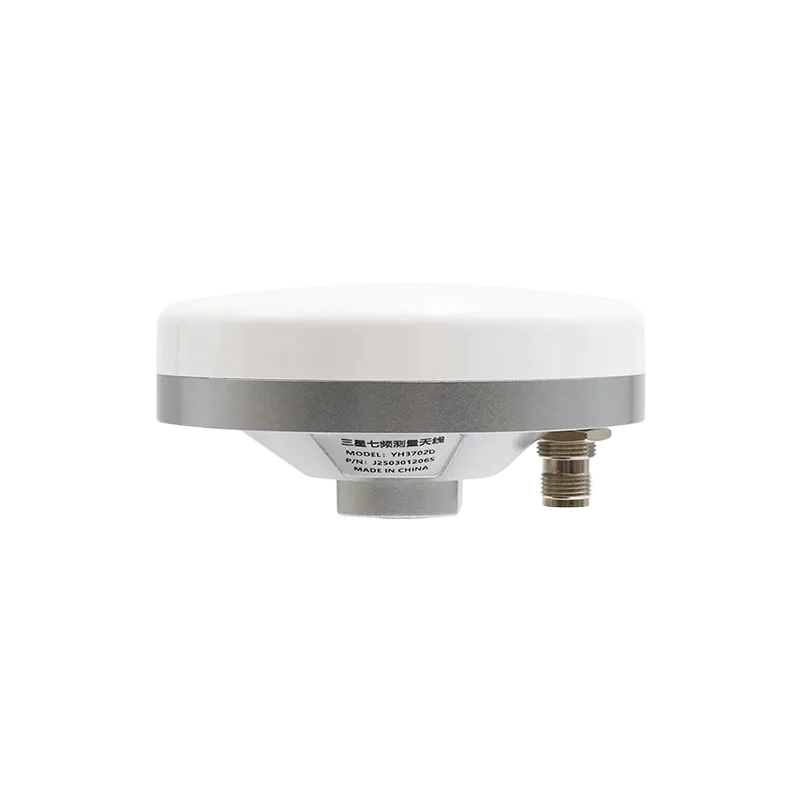
Our product lineup includes the highly acclaimed YHRTK-982, a multi-frequency, multi-constellation module that provides centimeter-level accuracy and dual-antenna heading capabilities. For developers looking for industry-standard compatibility, our ZED-F9P based solutions offer a proven track record of performance in autonomous platforms. We also provide high-performance RTK GNSS antennas specifically designed to survive the harsh environmental conditions of automotive use, including extreme temperatures and vibrations.
Choosing Yonghao means more than just buying a component; it means gaining access to our deep technical expertise in product customization and global navigation satellite systems. We are committed to pushing the boundaries of what is possible in automotive positioning, helping our clients build safer, more efficient, and more autonomous vehicles. For more information on our complete range of high-precision hardware, visit our RTK GNSS module catalog.
The Tangible Benefits of High-Precision Automotive Modules
-
Enhanced Passenger Safety: By providing a reliable lane-level position, the RTK GNSS module for automotive significantly reduces the risk of lane-departure accidents and improves the reliability of collision avoidance systems.
-
Operational Efficiency: For commercial fleets and logistics, high-precision positioning enables better route optimization and automated yard management, leading to reduced fuel consumption and faster turnaround times.
-
Future-Proofing: As smart cities and V2X infrastructure roll out, vehicles equipped with high-precision RTK modules will be ready to integrate with next-generation traffic management systems seamlessly.
Conclusion
The integration of the RTK GNSS module for automotive is a transformative step for the vehicle industry. It bridges the gap between basic navigation and the precise requirements of modern autonomous systems. By understanding the technical foundations and addressing the integration challenges head-on, manufacturers can deliver a driving experience that is both safer and more sophisticated. As technology continues to advance, the synergy between GNSS, IMU, and correction services will only grow stronger, making centimeter-level precision the standard for every vehicle on the road.
Ready to elevate your automotive navigation system?
Contact Yonghao Experts TodayFrequently Asked Questions
Q1: What is the main advantage of using an RTK GNSS module for automotive over standard GPS?
The main advantage is the jump from meter-level to centimeter-level accuracy. This allows for lane-level navigation, which is essential for ADAS and autonomous driving features that standard GPS simply cannot support due to its higher margin of error.
Q2: Does an RTK GNSS module for automotive work in tunnels?
By itself, GNSS cannot receive signals in tunnels. However, professional automotive modules are usually integrated with Inertial Dead Reckoning (IMU sensors), allowing the system to maintain an accurate position for a limited time until the satellite signal is restored.
Q3: How many satellites does an RTK GNSS module for automotive need to fix?
To achieve a high-precision RTK "fixed" solution, the module typically needs to track at least 6 to 8 satellites across multiple constellations with good signal quality and receive correction data from a base station or NTRIP network.
Q4: Are Yonghao modules compatible with existing automotive protocols?
Yes, our modules support standard communication protocols like NMEA, UBX, and can be integrated into automotive CAN bus systems, making them compatible with most vehicle ECUs and ADAS platforms.
Q5: What correction services are required for an RTK GNSS module for automotive?
An RTK module requires correction data in RTCM format. This can be provided by a local physical base station or via a cellular connection to a networked RTK service (NTRIP), which provides corrections based on the vehicle's approximate location.