


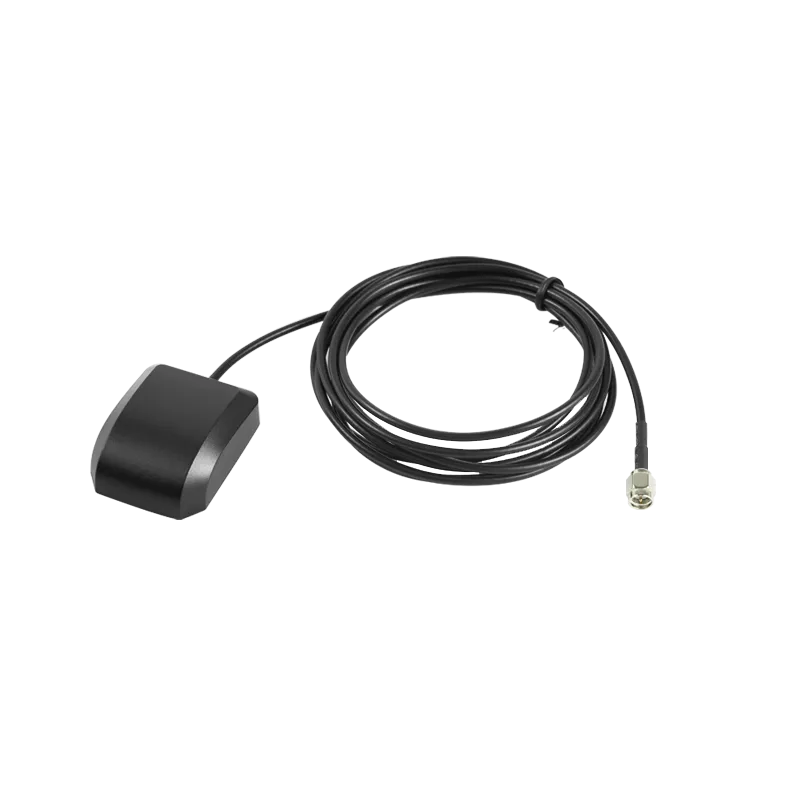
Exploring the technical landscape of compact wireless communication in the industrial Internet of Things (IIoT) ecosystem.
Introduction to wireless sensing in industrial environments
The rapid evolution of the industrial Internet of Things (IIoT) has necessitated a shift toward more compact, robust, and reliable communication hardware. At the heart of this transformation is the internal antenna for industrial sensors, a component that determines how effectively a device can transmit critical data across a factory floor or a remote monitoring site. Unlike external antennas that protrude from a device housing, internal solutions are embedded within the enclosure, providing protection against mechanical stress, chemical exposure, and environmental hazards. This guide delves into the complexities of designing and integrating these antennas, ensuring that industrial engineers can achieve high-performance connectivity without sacrificing the durability of their hardware.
In modern manufacturing, sensors are expected to operate in harsh conditions where dust, moisture, and high temperatures are the norm. The integration of an internal antenna for industrial sensors allows for a fully sealed enclosure, often reaching IP67 or IP68 ratings. This structural integrity is vital for maintaining long-term operational stability. However, placing an antenna inside a box brings significant electromagnetic challenges. Designers must account for the dielectric properties of the housing material, the proximity of the ground plane, and the potential for metallic interference from nearby components. Understanding these variables is the first step toward building a resilient wireless network.
Critical design considerations for embedded wireless modules
When selecting or designing an internal antenna for industrial sensors, the physical architecture of the device is the most influential factor. There are several types of internal antennas commonly used, including ceramic patch antennas, flexible printed circuits (FPC), and PCB-trace antennas. Each has distinct advantages depending on the available space and the required frequency bands, such as GNSS, Bluetooth, Wi-Fi, or LoRaWAN. For instance, a ceramic patch antenna is excellent for GNSS applications due to its high gain and stable circular polarization, but it requires a substantial ground plane to function efficiently. If the sensor body is too small, the antenna efficiency will drop significantly.
Material science also plays a pivotal role. The enclosure of the industrial sensor is typically made of plastic or composite materials to allow radio waves to pass through. However, even non-metallic plastics have a dielectric constant that shifts the resonant frequency of the antenna. This "detuning" effect means that an antenna tuned for open air will not perform optimally once installed inside a casing. Engineering teams must perform iterative testing and matching to ensure the antenna operates at the correct center frequency. Furthermore, the internal layout must keep the antenna away from noise-generating components like high-speed processors or switching power supplies, which can desensitize the receiver and reduce the communication range.
Ground plane management is another technical hurdle. Most internal antennas rely on the device PCB to act as a counterpoise. The size and shape of this ground plane directly affect the radiation pattern and bandwidth. In many industrial sensors, the PCB is cluttered with components, leaving little room for a dedicated antenna clearance area. Professional integration requires a balance between component density and electromagnetic hygiene. By utilizing advanced simulation tools, engineers can predict the radiation efficiency of the internal antenna for industrial sensors and make adjustments to the copper layout before the first prototype is ever manufactured.
Signal performance and reliability in complex environments
In an industrial setting, signal reliability is non-negotiable. An internal antenna for industrial sensors must provide a stable link despite multipath interference caused by metal machinery, shelving, and concrete walls. Performance is usually measured by parameters such as Voltage Standing Wave Ratio (VSWR), peak gain, and total radiated power (TRP). A low VSWR (typically below 2.0) indicates that the antenna is well-matched to the transmitter, ensuring that maximum power is delivered to the air rather than reflected back into the circuitry. For sensors deployed in deep indoor environments, high efficiency is critical to maintain the link budget and extend battery life.
Polarization is another factor that impacts signal performance. Most industrial gateways and base stations use vertical polarization. If the internal antenna for industrial sensors is oriented incorrectly within the device, a polarization mismatch can occur, leading to a signal loss of 3dB or more. In mobile applications, such as sensors mounted on robotic arms or AGVs, the orientation changes constantly. In these cases, antennas with omnidirectional radiation patterns or circular polarization are preferred to ensure consistent connectivity regardless of the device position. Yonghao provides specialized modules that address these specific industrial challenges through optimized RF paths.
Environmental interference is a constant threat in factories. High-voltage equipment and variable frequency drives (VFDs) generate significant electromagnetic noise. An internal antenna for industrial sensors must be paired with robust filtering and shielding to prevent "de-sense." This involves using high-quality Low Noise Amplifiers (LNAs) and Surface Acoustic Wave (SAW) filters within the RF front-end. When the antenna is integrated properly, the system can distinguish weak signals from the background noise floor, ensuring that critical data packets reach the cloud without retransmissions that drain energy and clog the bandwidth.
Practical integration guide for industrial engineers
The successful integration of an internal antenna for industrial sensors follows a systematic process. First, define the mechanical constraints. Is there enough vertical clearance for a ceramic patch, or is a flat FPC antenna more suitable for the slim profile of the sensor? Once the antenna type is chosen, the placement becomes the priority. The antenna should be located as far as possible from metal screws, batteries, and display modules. Even a small piece of metal within the "near-field" of the antenna can distort the radiation pattern and cause blind spots in the coverage area.
Second, focus on the RF feed line. The connection between the wireless module and the antenna must be a 50-ohm controlled impedance trace. Any mismatch here will lead to signal reflections and loss of efficiency. For internal antenna for industrial sensors, using microstrip or grounded coplanar waveguide designs on the PCB is standard practice. It is also essential to include a matching network (usually a Pi-network of capacitors and inductors) near the antenna feed point. This allows for fine-tuning the antenna once the device is fully assembled in its final housing, compensating for the enclosure's dielectric effects.
Finally, verification is key. Use a Vector Network Analyzer (VNA) to measure the return loss and an anechoic chamber to verify the 3D radiation pattern. Many industrial failures occur because the antenna was tested only in a prototype plastic case, but the final production unit used a different material or included a battery that blocked the signal. Comprehensive testing ensures that the internal antenna for industrial sensors will perform reliably over its entire service life, even in the most demanding industrial applications.
Yonghao: your partner in high-precision wireless technology
As a leader in the field of satellite navigation and wireless communication, Yonghao specializes in providing high-performance solutions for complex integration needs. Our expertise in GNSS and RF design allows us to offer integrated modules that simplify the deployment of an internal antenna for industrial sensors. We understand that industrial clients require more than just a component; they require a reliable signal path that works in the real world. Our products are designed to meet the rigorous standards of precision agriculture, drone navigation, and autonomous vehicle control.
Yonghao offers a wide range of RTK GNSS modules and antennas that are specifically engineered for internal placement. For example, our YM-450Q built-in module integrates both the receiver and the antenna into a single compact form factor, drastically reducing the complexity for sensor manufacturers. By choosing a pre-integrated solution, companies can avoid the pitfalls of RF design and focus on their core sensor logic. Our commitment to quality and technical support ensures that your internal antenna for industrial sensors integration is seamless and efficient.
Our advantage lies in our deep understanding of signal processing and anti-jamming technology. In environments where GPS signals are weak or intentionally disrupted, Yonghao provides the hardware necessary to maintain positioning accuracy. Whether you are developing a fleet management system or a robotic monitoring sensor, our antenna integrated modules deliver the performance required for the next generation of industrial automation.
Conclusion and strategic outlook
The role of the internal antenna for industrial sensors is only growing in importance as the world moves toward fully autonomous industrial operations. A well-integrated antenna is the bridge between the physical world and the digital twin of a factory. By prioritizing design considerations such as material selection, ground plane optimization, and RF hygiene, engineers can ensure that their sensors provide the high-quality data necessary for real-time decision-making. Yonghao remains dedicated to pushing the boundaries of what is possible in embedded wireless technology, providing the tools and expertise needed to overcome the toughest connectivity challenges.
Ready to optimize your industrial sensor connectivity?
Contact Yonghao Experts TodayFrequently asked questions
Q1: What are the main benefits of using an internal antenna for industrial sensors compared to an external one?
The primary benefits include enhanced durability, lower risk of physical damage, and the ability to create fully waterproof (IP-rated) enclosures. An internal antenna for industrial sensors is protected from corrosive chemicals, extreme weather, and mechanical impacts that could easily break an external whip antenna. Additionally, it allows for a more compact and aesthetically pleasing device design, which is often a requirement for modern IoT applications.
Q2: Can a metal enclosure be used with an internal antenna for industrial sensors?
Generally, no. Metal is an electromagnetic shield that blocks radio waves. If an internal antenna for industrial sensors is placed inside a completely sealed metal box, the signal will not be able to transmit or receive. If a metal housing is necessary for structural reasons, designers must include a "window" made of plastic or glass where the antenna is located, or use specialized slot antenna designs that are much more complex to implement.
Q3: How does Yonghao ensure the reliability of its internal antenna for industrial sensors modules?
Yonghao utilizes rigorous testing protocols, including environmental chamber testing and advanced RF simulation. Our modules, such as those found in our GPS module product line, are designed with high-quality components that maintain frequency stability over a wide temperature range. We also provide comprehensive integration support to help clients match the internal antenna for industrial sensors to their specific housing and PCB environment.
Q4: What is the impact of a battery on the performance of an internal antenna for industrial sensors?
A battery is essentially a large block of metal and can significantly degrade antenna performance if placed too close. It can shift the resonant frequency and block the radiation pattern in certain directions. When integrating an internal antenna for industrial sensors, it is critical to maintain a clearance distance between the antenna and the battery, or to use the battery as part of the ground plane in a way that is accounted for during the initial RF design phase.
Q5: Which frequency bands are best supported by an internal antenna for industrial sensors?
An internal antenna for industrial sensors can be designed for almost any frequency, including sub-GHz (LoRa, Sigfox), 2.4GHz (Wi-Fi, Bluetooth), and microwave frequencies (GNSS). Higher frequencies typically allow for smaller antenna sizes, making them easier to fit inside compact sensor housings. Yonghao offers multi-frequency solutions that allow a single device to handle GNSS positioning and wireless data transmission simultaneously using optimized internal structures.
Specializing in high-precision GNSS modules, anti-jamming systems, and industrial wireless solutions.
© 2024 Yonghao Technology. All rights reserved.