


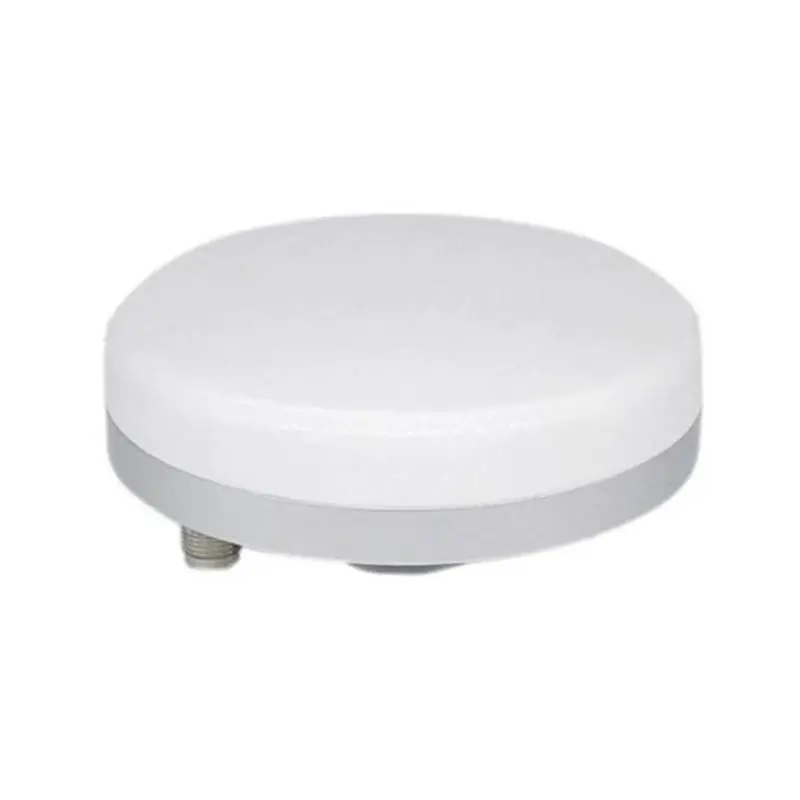
A Timing Antenna is the unsung component that turns a GNSS receiver into a precision clock. While a typical GNSS antenna is judged by how well it helps a device find its position, a Timing Antenna is judged by how cleanly it can deliver a one-pulse-per-second (1PPS) signal, a stable frequency reference, or an NTP/PTP-grade time stamp to whatever system it feeds. In 5G base stations, power substations, financial trading floors, and broadcast networks, that difference between a position antenna and a Timing Antenna is the difference between a passing smoke test and a network that actually meets its synchronization budget.
This guide walks through what a Timing Antenna actually is, the specifications that matter for synchronization, and the design choices that separate a timing-grade part from a generic GNSS antenna repurposed for timing. If you are a network engineer, a synchronization architect, or a system designer about to spec a Timing Antenna for the first time, the goal here is to give you a framework that survives the transition from a datasheet to a working network element.
What Is a Timing Antenna?
A Timing Antenna is a GNSS antenna engineered for stable phase and group delay across the L1 band, rather than for maximum gain or multipath rejection. The reason is straightforward: time transfer is a phase problem. To deliver a 100 ns time error at the receiver output, the antenna and the front-end together must hold the signal's group delay variation to a few nanoseconds over temperature, over the full elevation range, and across the operating voltage of the receiver.
Practically, a Timing Antenna is almost always a high-stability patch or a choke-ring variant with a tightly matched LNA, a low-phase-noise SAW filter, and a DC bias feed for an active antenna configuration. Some Timing Antenna designs are housed in weatherproof enclosures with a long run of low-loss coax to the receiver; others are integrated into a small puck for indoor or pole-mount deployments. What all of them share is a phase response that does not drift more than a fraction of a nanosecond across the satellite pass.
Why Timing Accuracy Matters in 5G, Power, and Financial Networks
Three classes of network have turned the Timing Antenna from a niche component into a critical part of the bill of materials.
5G base stations. Time Division Duplex (TDD) and the new coordinated multi-point features of 5G NR require base stations to be synchronized to within 130 ns to 260 ns of each other, depending on the use case. A Timing Antenna that drifts by 50 ns during a satellite pass can put a cell out of compliance and trigger inter-cell interference. That is why most Tier-1 operators mandate a Timing Antenna with documented phase-center stability rather than letting integrators choose a generic GNSS antenna.
Power substations. IEC 61850-9-3 and the IEEE C37.238 profiles require phasor measurement units (PMUs) to be synchronized to within 1 microsecond of UTC, and many utilities push for sub-100 ns accuracy at the merge unit. A Timing Antenna that sits on a substation roof or a transmission tower is typically the only GNSS antenna in the system, which means any drift or group-delay error is added directly to the time error budget.
Financial trading and broadcast. High-frequency trading regulations in several jurisdictions require a timestamp accuracy of 100 microseconds or better; broadcast networks use SFN (single-frequency network) operation that needs synchronization at the same order of magnitude. A Timing Antenna is what allows a GNSS-disciplined oscillator to deliver that accuracy without the cost of a cesium reference at every site.
Key Specifications of a Timing Antenna
A Timing Antenna lives or dies by a small set of specifications. Reading a generic GNSS antenna datasheet for a timing application is a recipe for disappointment, because the specs that matter most for synchronization are usually hidden on page three.
1. Group delay variation. A Timing Antenna should specify group delay variation in nanoseconds across the L1 band, not just a vague "stable phase" claim. The best timing-grade antennas stay under 5 ns of group delay variation across the full elevation mask; anything above 15 ns will start to eat into your time error budget.
2. Phase center stability. A timing-grade patch typically achieves better than 2 mm phase center repeatability, which directly translates to sub-nanosecond time repeatability. Choke-ring variants push that into the sub-millimeter range at the cost of a much larger form factor.
3. Multipath rejection. Reflections from rooftops, substation steelwork, and cell-tower booms can shift a Timing Antenna's effective phase center by several centimeters. A well-designed choke-ring Timing Antenna, or a patch with a high-rejection LNA filter, can knock 6 to 10 dB off the multipath contribution compared with a generic patch.
4. Out-of-band rejection. Cell-tower sites and substations are hostile RF environments. A Timing Antenna with a SAW filter in front of the LNA can reject the strong out-of-band signals from nearby cellular and radar systems, which would otherwise saturate the LNA and degrade the time solution.
5. Voltage and temperature stability. Group delay drifts with temperature, and a Timing Antenna that ships without a published temperature coefficient of delay will drift unpredictably across seasonal swings. Look for a part that documents delay variation across at least -40 to +85 degrees Celsius.
How to Deploy a Timing Antenna in a Real Network
A Timing Antenna deployment has three failure modes that show up in every field rollout. Plan for them up front and you will save weeks of troubleshooting.
Site survey first. Before mounting the Timing Antenna, walk the roof or the tower location with a handheld GNSS receiver and a clear-sky mask. If the satellite visibility is blocked by more than 30 degrees of elevation in any quadrant, no Timing Antenna will save the time solution. Choose a site with at least 6 satellites visible above 10 degrees at all times.
Coax and lightning protection. The Timing Antenna feed is the single largest source of group delay error after the antenna itself. Use a low-loss coax rated for the run length, and add an in-line lightning arrestor at the building entry. A surge event on a Timing Antenna can take out the receiver and the network element it feeds.
Holdover validation. A Timing Antenna is only as good as the disciplined oscillator it feeds. Run a 24-hour holdover test during site commissioning: disable the GNSS feed after the oscillator has locked, and verify that the time error stays inside the network's specification for the required holdover window. This single test catches more deployment problems than any other.
Common Pitfalls in Timing Antenna Integration
Across our timing deployments, the same four mistakes show up more often than the others. Skim them before you commit to a BOM.
Reusing a positioning antenna. A positioning GNSS antenna is optimized for gain, not for group delay. Plugging one into a timing receiver will technically work, but the time error will drift 2 to 5 times higher than with a true Timing Antenna. If you have to reuse a positioning antenna, budget an extra 50 to 100 ns of time error and verify with a holdover test.
Skipping the surge arrestor. Lightning-induced surges on rooftop Timing Antenna feeds are a top-3 cause of field failures. The arrestor is cheaper than a truck roll, and it pays for itself the first time it saves a receiver.
Mounting on a vibrating structure. A Timing Antenna mounted on a steel tower or a vibrating rooftop can suffer phase-center micro-movements that show up as time noise. Use a vibration-isolated mount, and avoid mounting directly on a cell-tower boom that sways in the wind.
Ignoring the cable temperature coefficient. Coax delay changes with temperature. A Timing Antenna feed run that is exposed to direct sunlight for half the day can drift the time error by 10 to 20 ns over a 12-hour cycle. Use a temperature-stable coax, or run the cable through conduit to limit the swing.
Where We Fit: xyzgnss Timing Antenna Portfolio
At xyzgnss we have built our Timing Antenna family around the same principle that drives the rest of our GNSS product line: tight specifications, documented behavior, and reference designs that move from the bench to a deployed network without a re-engineering step. Our Timing Antenna portfolio includes high-stability patches for substation and small-cell deployments, as well as choke-ring variants for survey-grade and primary-reference applications.
You can browse our Timing Antenna family alongside the rest of our antenna portfolio on the all-antenna product page. For customers who want to validate a Timing Antenna in a real network before committing, our high-precision GPS antenna guide walks through the field tests our engineering team uses during customer evaluations, and our base station deployment article is the closest reference for a fixed-mount Timing Antenna installation.
If you would like a sample Timing Antenna or a holdover test report from one of our reference deployments, our technical team can ship an evaluation kit and walk through the site survey checklist with your network engineers. We have supported Timing Antenna rollouts for Tier-1 mobile operators, transmission utilities, and broadcast networks, and we are happy to bring that field experience to your project.
Conclusion
A Timing Antenna is not a commodity GNSS antenna in a different box. It is a system component that has to be selected with the same care as the disciplined oscillator it feeds, and deployed with a clear understanding of the time error budget of the network. If you are sizing a Timing Antenna for a new 5G cell, a substation upgrade, or a financial trading deployment, our team can help you choose the right part, validate it in a holdover test, and ship a kit that matches your site survey.
Ready to spec a Timing Antenna for your network? Talk to our timing engineering team about a sample, a holdover test plan, and a reference design for your deployment. Contact xyzgnss to start a project →
Frequently Asked Questions
Q1: What Is a Timing Antenna and How Does It Differ From a Standard GNSS Antenna?
A Timing Antenna is engineered for stable group delay and phase center across the L1 band, not for maximum gain or position accuracy. A standard GNSS antenna optimizes for position fix quality, which is a different problem. The two look similar from the outside, but a Timing Antenna will publish a group delay variation in nanoseconds and a phase center repeatability in millimeters, while a generic GNSS antenna will not.
Q2: Why Does a 5G Base Station Need a Timing Antenna With Sub-100 ns Accuracy?
5G TDD and coordinated multi-point features require base stations to be synchronized within 130 to 260 ns of each other. A Timing Antenna that drifts more than 50 ns during a satellite pass can push a cell out of compliance and trigger inter-cell interference. That is why mobile operators specify a Timing Antenna with documented phase stability rather than letting integrators choose a generic GNSS antenna.
Q3: How Does Group Delay Variation Affect Timing Antenna Performance?
Group delay variation is the single largest contributor to time error after the satellite geometry itself. A Timing Antenna with 5 ns of group delay variation will hold the time solution within a tighter window than one with 15 ns. For substation and primary-reference applications, a Timing Antenna with documented sub-5 ns group delay variation is the practical floor.
Q4: Can a Timing Antenna Be Installed Indoors or on a Rooftop?
Both are common, but the requirements differ. A rooftop Timing Antenna needs weatherproofing, lightning protection, and a clear sky view. An indoor Timing Antenna needs a window or a re-radiating antenna system, and typically achieves a noisier time solution. For most timing-grade applications, a rooftop Timing Antenna with a low-loss coax feed to the receiver is the more reliable choice.
Q5: Where Can I Source a Timing Antenna for a Trial Deployment?
We supply Timing Antenna evaluation kits with the antenna, a matched LNA, a low-loss coax, and a holdover test plan. Contact our timing engineering team and we can typically ship a Timing Antenna sample within two business days, along with a reference design and a site survey checklist for your specific deployment.