


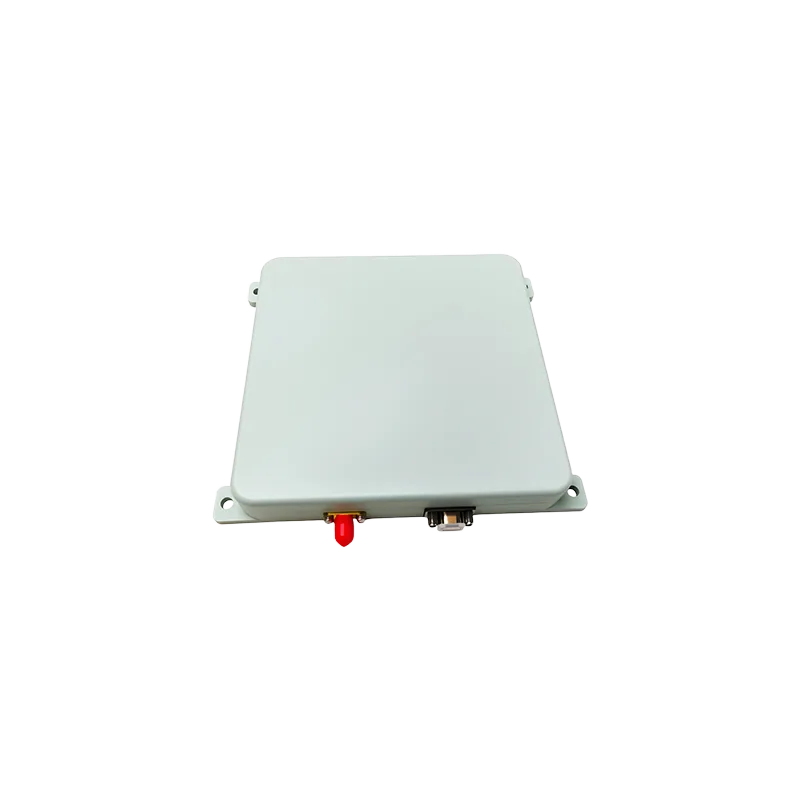
A comprehensive guide to protecting satellite navigation signals in increasingly complex electromagnetic environments.
The rising necessity of GNSS protection
In the modern era of autonomous systems and precision navigation, the reliability of Global Navigation Satellite System (GNSS) signals has become a cornerstone of global infrastructure. From unmanned aerial vehicles (UAVs) performing critical deliveries to automated tractors managing vast hectares of farmland, the dependence on GPS, BDS, GLONASS, and Galileo is absolute. However, these signals originate from satellites orbiting over 20,000 kilometers away, arriving at the Earth's surface with extremely low power levels. This inherent weakness makes them highly susceptible to interference, whether accidental or intentional. If you are currently browsing an anti-jamming antenna for sale, you are likely aware that a standard antenna is no longer sufficient for high-stakes operations. Professional-grade anti-jamming solutions are designed to identify and mitigate these disruptive signals, ensuring that the receiver remains locked on the legitimate satellite transmission even in contested environments.
The threat landscape is evolving rapidly. Simple unintentional interference can arise from faulty industrial equipment, telecommunications towers, or even high-voltage power lines. On the more severe end of the spectrum, intentional jamming—where devices are used specifically to drown out GNSS frequencies—is becoming a common challenge in defense and security applications. This guide will explore the technical mechanics of how these systems work and why choosing a high-quality anti-jamming antenna for sale is the most effective way to safeguard your positioning and timing data. We will delve into the nuances of spatial filtering, multi-element arrays, and how Yonghao technology leads the industry in providing these critical defenses.
How anti-jamming antennas function
To understand why you need a specialized anti-jamming antenna for sale, one must understand the difference between a Fixed Reception Pattern Antenna (FRPA) and a Controlled Reception Pattern Antenna (CRPA). A standard FRPA has a fixed "view" of the sky, receiving everything within its field of vision, including the jamming signal. In contrast, an anti-jamming antenna, particularly the CRPA type, utilizes multiple antenna elements to create a dynamic reception pattern. By employing sophisticated digital signal processing, the system can identify the direction from which an interference signal is originating and "null" that specific direction. This process, known as spatial filtering, effectively creates a blind spot for the jammer while maintaining high sensitivity for the satellites located in other parts of the sky.
This technical superiority is not just about blocking noise; it is about signal integrity. Advanced algorithms like the Power Minimization or Constrained Minimum Variance (CMV) are used to adapt to the changing environment in real-time. If a jammer moves or if multiple jammers are present, the antenna array adjusts its nulls instantaneously. When evaluating an anti-jamming antenna for sale, it is vital to check the number of channels and elements. For instance, a four-channel system can typically mitigate up to three independent jamming sources. Higher-end models, such as those with eight or sixteen elements, offer even more robust protection, capable of handling complex, multi-directional interference scenarios without losing the GNSS fix. This level of protection is essential for maintaining the centimeter-level accuracy required by RTK systems in hostile RF environments.
Critical features to evaluate in a GNSS solution
When searching for a professional anti-jamming antenna for sale, several technical specifications will determine the success of your integration. First and foremost is the frequency support. A truly versatile system should support multiple constellations, including GPS (L1/L2), BDS (B1/B2/B3), GLONASS (G1/G2), and Galileo (E1/E5). Multi-frequency support provides a layer of redundancy; even if one frequency band is heavily jammed, the system may still find a clean signal on another. Furthermore, the suppression depth is a key metric, often measured in decibels (dB). A high-performance unit from Yonghao can provide suppression of 40dB to 50dB, effectively reducing the power of a jammer by a factor of 10,000 or more, allowing the desired signal to emerge from the noise.
Another critical aspect is the physical form factor and power consumption. For UAV applications, weight is a primary concern. An anti-jamming antenna for sale that is too heavy will reduce flight time and payload capacity. Modern advancements have led to ultra-compact designs that integrate the antenna elements and the processing electronics into a single, lightweight housing. Connectivity is also vital. Most high-end systems use standard SMA or TNC connectors and are compatible with existing GNSS receivers. You should also consider the environmental sealing. Since these antennas are often mounted on the exterior of vehicles, ships, or aircraft, they must have an IP67 or higher rating to withstand rain, dust, and extreme temperature fluctuations. The integration of high-stability LNA (Low Noise Amplifiers) within the antenna also ensures that the signal remains clean as it travels through the cabling to the receiver.
Industrial applications for anti-jamming technology
The use cases for an anti-jamming antenna for sale span across numerous high-tech industries. In the world of unmanned systems, especially FPV (First Person View) drones and long-range survey UAVs, GNSS interference can lead to a "flyaway" situation or a catastrophic crash. By installing a compact anti-jamming terminal, operators can ensure that the drone maintains its home point and follows its programmed path even if it encounters local interference. Similarly, in the maritime sector, large vessels rely on GNSS for navigation through narrow channels and for automated docking systems. A lost signal at a critical moment could lead to significant financial loss or environmental damage. Our maritime-grade solutions are designed to handle the reflective environment of the sea while blocking out terrestrial jammers.
In the field of precision agriculture, the stakes are equally high. Modern farming relies on RTK (Real-Time Kinematic) positioning to guide tractors with sub-inch accuracy. Any interruption in the GNSS signal can halt operations, leading to wasted fuel and uneven planting or chemical application. In some regions, unintentional interference from neighboring industrial sites or cellular towers is a persistent problem. Farmers and agricultural tech providers are increasingly looking for a reliable anti-jamming antenna for sale to integrate into their automated steering systems. By ensuring 24/7 signal availability, these antennas maximize the ROI (Return on Investment) of expensive agricultural machinery. Furthermore, critical infrastructure such as power grids and financial networks, which rely on GNSS for nanosecond-level timing, are also adopting anti-jamming technology to prevent synchronized attacks that could disrupt national services.
Why choose Yonghao for your GNSS needs
At Yonghao, we have dedicated years to the research and development of high-precision satellite navigation components. Our expertise lies in creating robust, reliable, and innovative solutions for the most demanding environments. We understand that every project has unique requirements, which is why we offer a diverse range of anti-jamming antenna for sale options, ranging from ultra-lightweight modules for small drones to powerful 16-element arrays for heavy industrial and defense applications. Our products, such as the YH100 four-channel system, are tested rigorously to ensure they meet the highest standards of performance and durability.
Our commitment to excellence extends beyond just the hardware. We provide comprehensive technical support and customization services to ensure that our technology integrates seamlessly into your existing workflows. Whether you need a specific connector type, a custom mounting bracket, or assistance with algorithm tuning, our engineering team is ready to help. When you purchase an anti-jamming antenna for sale from us, you are not just buying a product; you are gaining a partner in navigation security. Our global presence and extensive history in the GNSS industry have allowed us to serve clients in agriculture, surveying, robotics, and autonomous transport, helping them overcome the challenges of signal interference and maintain operational continuity regardless of the electromagnetic environment.
Frequently asked questions
Q1: Where is the best place to find an anti-jamming antenna for sale for UAVs?
The best place to find a high-quality anti-jamming antenna for sale specifically designed for UAVs is through specialized GNSS providers like Yonghao. For drones, weight and size are the most critical factors. You should look for integrated terminals that combine the antenna and processing unit to minimize the footprint. Our lightweight series is specifically engineered to protect drone navigation without compromising flight dynamics.
Q2: How does an anti-jamming antenna for sale improve RTK accuracy?
An anti-jamming antenna for sale improves RTK accuracy by filtering out the multi-path interference and noise that can cause signal "cycle slips." In RTK, maintaining a continuous lock on the carrier phase of the satellite signal is essential for centimeter-level precision. By eliminating interference, our antennas ensure the receiver stays locked, preventing the system from reverting to less accurate DGPS or standalone modes.
Q3: What is the price range of a professional anti-jamming antenna for sale?
The cost of an anti-jamming antenna for sale varies significantly based on the number of elements (channels) and the supported frequency bands. Entry-level four-channel systems are more affordable and suitable for general commercial use, while eight-channel or sixteen-channel terminals designed for mission-critical infrastructure or defense carry a premium. At Yonghao, we offer competitive pricing tailored to both small-scale projects and large enterprise deployments.
Q4: Can an anti-jamming antenna for sale protect against spoofing?
While the primary function of most anti-jamming antenna for sale units is to mitigate noise-based interference, advanced CRPA systems can also help detect and mitigate spoofing. By analyzing the angle of arrival of the incoming signals, the system can identify if multiple satellite signals are originating from a single terrestrial source (a spoofer) and null that direction, much like it does with a jammer.
Q5: Is it difficult to install a newly purchased anti-jamming antenna for sale?
No, most modern anti-jamming antenna for sale solutions are designed for "plug-and-play" integration. They typically sit between the antenna elements and the GNSS receiver or are fully integrated into a single unit. Yonghao provides detailed wiring diagrams and technical support to ensure that your installation is successful. Our systems are compatible with most standard GNSS boards, including those from major manufacturers used in surveying and robotics.
Secure your navigation today
Don't let signal interference compromise your operations. Whether you are in agriculture, maritime, or aerospace, our team is ready to provide the professional protection you need.