


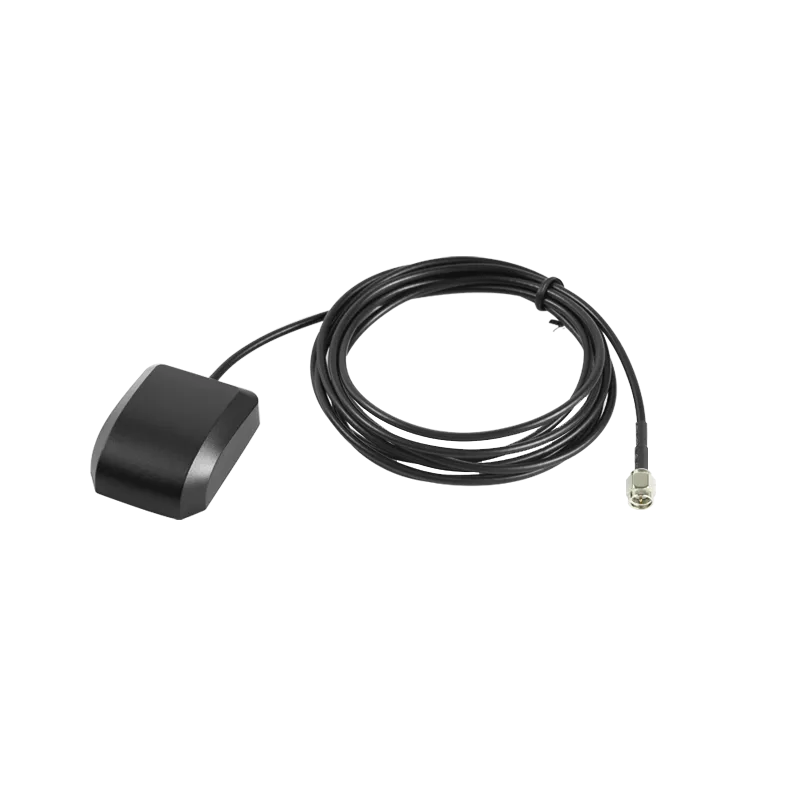
Discover how modern GNSS technology and high-performance hardware are revolutionizing the agricultural landscape through enhanced accuracy and reliability.
The evolution of modern farming with high-precision technology
In the contemporary era of agricultural production, the reliance on traditional manual labor is rapidly being replaced by data-driven decision-making and automated machinery. At the heart of this transformation lies the integration of Global Navigation Satellite System (GNSS) solutions. A critical component in this ecosystem is the GPS antenna for precision agriculture. This device serves as the primary gateway for receiving signals from various satellite constellations, including GPS, GLONASS, Galileo, and Beidou. Without a high-quality antenna, even the most advanced tractor or harvester remains incapable of performing centimeter-level tasks. As farmers strive for higher efficiency and lower input costs, understanding the mechanics of signal reception becomes paramount. The precision of agricultural operations depends directly on the ability of the hardware to maintain a stable connection with orbiting satellites under varying environmental conditions.
The role of a GPS antenna for precision agriculture extends beyond mere positioning; it facilitates complex tasks such as auto-steering, variable rate application (VRA), and detailed yield mapping. By providing the exact spatial coordinates of a vehicle in real-time, these antennas allow for precise seed placement and optimized fertilizer distribution. This level of accuracy ensures that resources are utilized only where they are needed most, significantly reducing waste and environmental impact. Furthermore, as agricultural machinery grows more autonomous, the demand for robust, multi-frequency antennas increases. These systems must be capable of filtering out noise and multipath interference while maintaining high gain across all relevant frequency bands. For any modern farm operation, selecting the right antenna is not just a hardware choice, but a strategic investment in the future of sustainable productivity.
Core technical requirements for agricultural signal reception
To achieve the centimeter-level accuracy required for activities like row-cropping and strip-tilling, a GPS antenna for precision agriculture must support multi-constellation and multi-frequency signals. Standard single-frequency antennas are often insufficient because they are more susceptible to atmospheric delays, particularly ionospheric interference. High-end antennas are designed to capture L1, L2, and often L5 frequencies, allowing the GNSS receiver to calculate and cancel out these errors. This process is further enhanced by Real-Time Kinematic (RTK) technology, which utilizes a base station or a network of reference stations to provide differential corrections. The antenna must be engineered with a high phase center stability, ensuring that the electrical center of the antenna remains constant regardless of the direction or elevation of the incoming satellite signal. This stability is crucial for maintaining consistent guidance lines during field operations.
In addition to frequency support, the physical design of the antenna plays a vital role in its performance. Precision agriculture often involves working in harsh environments characterized by dust, vibration, and extreme weather. Consequently, these antennas are usually housed in rugged, IP67 or IP69K-rated enclosures to prevent ingress of water and debris. The internal components must feature advanced low-noise amplifiers (LNA) to boost weak satellite signals without introducing significant distortion. Furthermore, the antenna should have excellent multipath rejection capabilities. Multipath occurs when signals reflect off surfaces such as metal sheds, trees, or the ground before reaching the antenna, leading to positioning errors. Specialized ground plane designs and filtering technologies are integrated into high-quality models to mitigate these reflections, ensuring that only the direct line-of-sight signals are processed by the agricultural controller.
Strategic installation tips for maximum performance
Correct placement of the GPS antenna for precision agriculture is fundamental to ensuring the reliability of the entire guidance system. Ideally, the antenna should be mounted at the highest point of the vehicle, typically on the roof of the tractor cabin. This location provides a clear, 360-degree view of the sky, minimizing the risk of signal blockage from the machinery itself. It is also important to ensure that the antenna is mounted on a stable, level surface. Any tilting or wobbling during operation can introduce "noise" into the positioning data, which the auto-steering system may interpret as a change in direction, resulting in uneven rows. If the roof is not made of metal, a dedicated magnetic mount or a metal ground plane plate should be used to improve the antenna's signal reception characteristics.
Cabling and connectivity are often overlooked but are equally critical. High-quality coaxial cables with low signal loss should be used to connect the antenna to the GNSS receiver inside the cab. These cables must be routed away from other electrical wiring or high-power equipment to avoid electromagnetic interference (EMI). Furthermore, connectors should be tightened properly and protected with weatherproofing tape if they are exposed to the elements. During the initial setup, it is vital to input the exact offset measurements of the antenna relative to the vehicle's rear axle and the ground. The agricultural software uses these measurements to calculate the precise position of the implement (such as a planter or sprayer) behind the tractor. An error of just a few centimeters in these manual measurements can negate the benefits of a high-precision antenna, leading to overlaps or gaps in the field.
Overcoming signal stability challenges and interference
One of the most significant challenges facing farmers is maintaining signal stability in complex terrains. When operating near dense tree lines, hills, or large farm structures, the GPS antenna for precision agriculture may lose sight of enough satellites to maintain an RTK fix. To counter this, modern systems often incorporate "dead reckoning" or Inertial Measurement Units (IMU) that work in tandem with the antenna. These sensors track the vehicle's motion and can bridge short gaps in GNSS coverage, ensuring the tractor stays on path even when the satellite signal is momentarily obscured. However, the antenna remains the primary source of truth, and its ability to quickly re-acquire signals after a blockage (cold start and warm start performance) is a key metric of its quality.
Interference and jamming are also growing concerns in the agricultural sector. As the radio frequency (RF) spectrum becomes more crowded, signals from telecommunication towers or nearby industrial equipment can occasionally interfere with GNSS frequencies. Professional-grade agricultural antennas are equipped with narrow-band filters to reject out-of-band signals. In some regions, deliberate signal jamming or spoofing can also be a threat. Advanced solutions, such as those provided by Yonghao, include anti-jamming technologies that protect the integrity of the positioning data. By utilizing multi-element antenna arrays or sophisticated digital signal processing, these systems can identify and nullify interference sources, providing a resilient navigation solution that allows farming operations to continue without interruption regardless of the external RF environment.
Practical applications in smart farming workflows
The implementation of a GPS antenna for precision agriculture unlocks a wide range of smart farming applications that directly impact the bottom line. Auto-steering is perhaps the most well-known application, allowing operators to work for longer hours with less fatigue while maintaining perfect line-to-line accuracy. This reduces the overlap between passes, which in turn saves fuel and reduces the wear and tear on machinery. Beyond steering, variable rate technology uses the antenna's positioning data to adjust the application rate of seeds, fertilizers, and pesticides in real-time based on pre-loaded prescription maps. Areas of the field with higher yield potential receive more inputs, while lower-potential zones are managed more conservatively, optimizing the Return on Investment (ROI) for every acre.
Another critical application is controlled traffic farming (CTF), where all farm machinery follows permanent tracks in the field. This practice minimizes soil compaction, leading to better root growth and water infiltration. Achieving this requires repeatable accuracy year after year, which is only possible with high-performance GNSS antennas and RTK corrections. Furthermore, during harvest, these antennas facilitate accurate yield mapping. By correlating the volume of grain being harvested with its exact location in the field, farmers can generate detailed maps that highlight productivity variations. This data becomes the foundation for the following year's management plan, creating a continuous cycle of improvement. As we move toward fully autonomous farming systems, the antenna will continue to be the essential link between digital intelligence and physical execution in the field.
Professional GNSS solutions by Yonghao
Yonghao is a leading innovator in the field of high-precision positioning technology, specializing in the development of robust hardware for the most demanding agricultural environments. Our company focuses on delivering high-performance components that ensure farmers can achieve centimeter-level accuracy with ease. We understand that in the world of precision agriculture, downtime is not an option. That is why our products are tested to withstand extreme vibration, moisture, and temperature fluctuations, providing reliable service season after season.
Our extensive product lineup includes various models tailored for different needs. For those seeking integrated solutions, the GPS antenna for precision agriculture model YH-6311 offers exceptional phase center stability and multi-constellation support. We also provide high-precision modules such as the RTK GNSS module UM980, which is designed for seamless integration into agricultural machinery controllers. Whether you are looking for a standalone RTK GNSS antenna or a comprehensive ZED-F9P module solution, Yonghao has the expertise and the hardware to elevate your farming operations.
High Gain and Low Noise: Our antennas are engineered to capture signals even in challenging environments.
Rugged Durability: IP-rated enclosures protect against the toughest field conditions.
Global Support: Our products support GPS, GLONASS, Galileo, and BDS constellations.
Frequently asked questions
Q1: What is the primary role of a GPS antenna for precision agriculture?
The primary role of a GPS antenna for precision agriculture is to capture satellite signals from various constellations and convert them into electrical data for the GNSS receiver. In a farming context, this allows for precise positioning of tractors and implements, enabling automated steering, accurate planting, and efficient resource management. Yonghao antennas are specifically designed to optimize this reception for maximum field uptime.
Q2: How does a multi-frequency GPS antenna for precision agriculture improve accuracy?
Multi-frequency antennas receive signals on different bands (like L1 and L2). This allows the system to compare the signals and eliminate errors caused by the ionosphere, which is one of the biggest sources of inaccuracy in GNSS positioning. By using a multi-frequency GPS antenna for precision agriculture, farmers can achieve the centimeter-level precision required for high-stakes tasks like planting and strip-tilling.
Q3: Can a GPS antenna for precision agriculture operate effectively near trees or hills?
Signal blockage from trees or hills is a common issue. While a high-quality GPS antenna for precision agriculture from Yonghao features superior gain and tracking capabilities to maintain a lock on weak signals, severe blockages can still lead to signal loss. In such cases, we recommend pairing our antennas with IMU-integrated receivers to provide temporary guidance through shadowed areas.
Q4: Why is RTK support essential for a GPS antenna for precision agriculture?
RTK (Real-Time Kinematic) provides the correction data necessary to bridge the gap between "meter-level" and "centimeter-level" accuracy. A GPS antenna for precision agriculture must be capable of maintaining a stable phase center to work effectively with RTK corrections. Yonghao high-precision antennas are optimized for RTK workflows, ensuring that the tractor stays exactly on the intended path.
Q5: How do I maintain my Yonghao GPS antenna for precision agriculture?
Maintenance is straightforward: ensure the antenna dome is kept clean of thick mud or debris, which can attenuate signals. Periodically check the cable connections for tightness and signs of wear. Because Yonghao products are built for the field, they require very little intervention, but keeping the view to the sky clear and the physical connections secure is key to long-term performance.
Ready to optimize your agricultural precision?
Investing in a high-quality GPS antenna for precision agriculture is the first step toward a more efficient and profitable farm. Yonghao provides the technology you need to stay on track.