


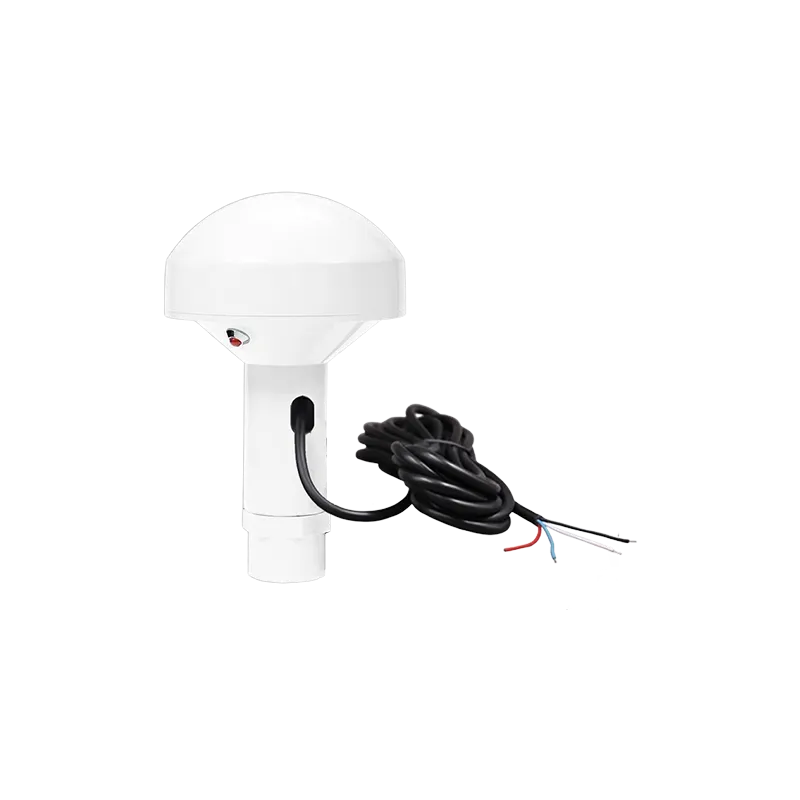
Exploring the transformative power of high-precision satellite positioning in modern agrotechnology and the essential role of specialized hardware.
The fundamental role of a GPS receiver for precision agriculture
The modernization of the agricultural sector has reached a tipping point where efficiency is no longer just a goal but a necessity for survival in a competitive global market. At the heart of this revolution lies the GPS receiver for precision agriculture. This technology allows farmers to transcend traditional farming methods by providing localized data and millimeter-level positioning that dictates how seeds are planted, how fertilizers are distributed, and how harvests are managed. Unlike standard navigation systems used in smartphones or automotive vehicles, agricultural receivers must handle complex environmental challenges such as tree canopies, undulating terrain, and the constant vibration of heavy machinery while maintaining absolute signal integrity.
Integrating a professional-grade GPS receiver for precision agriculture enables the implementation of controlled traffic farming (CTF), which reduces soil compaction and maximizes the arable area of a field. By utilizing global navigation satellite system (GNSS) constellations including GPS, GLONASS, Galileo, and Beidou, these devices ensure that a tractor's path is optimized to prevent overlap. This precision directly translates into significant cost savings on fuel, labor, and chemical inputs. As we look toward the future, the reliance on satellite-derived data will only increase, making the choice of receiver one of the most critical infrastructure decisions for any modern farming enterprise.
Achieving centimeter-level accuracy with RTK and GNSS technology
To understand why a specialized GPS receiver for precision agriculture is superior to consumer electronics, one must delve into the mechanics of real-time kinematic (RTK) positioning. Traditional GPS provides an accuracy of several meters, which is insufficient for tasks like row-cropping or autonomous weeding. RTK technology works by utilizing a stationary base station that transmits correction data to the mobile receiver on the tractor. This process cancels out atmospheric errors and orbital drifts, allowing the system to achieve centimeter-level accuracy. For the digital new farmer, this means the ability to return to the exact same track months later for post-emergence applications without damaging the growing crops.
Furthermore, the transition from single-constellation GPS to multi-frequency GNSS has been a game-changer. Modern receivers track multiple signal bands (such as L1, L2, and L5). This multi-frequency approach significantly reduces the time required for the initial signal fix and improves performance in challenging environments where multipath interference might occur. In precision agriculture, the stability of the signal is just as important as the accuracy itself. High-end modules are designed with advanced filtering algorithms to suppress noise and maintain a stable heading even when the vehicle is moving slowly or navigating steep inclines.
Enhancing operational efficiency through automated steering and robotics
One of the most visible applications of a GPS receiver for precision agriculture is the automated steering system. By linking the receiver to the vehicle's hydraulic or electric steering motor, the system can guide the tractor along a predefined path with far greater consistency than a human operator could ever achieve. This reduces operator fatigue, allowing for longer working hours during critical windows like planting or harvesting seasons. When the machinery drives itself with high precision, the farmer can focus on monitoring the performance of the implement, such as checking for clogged nozzles on a sprayer or ensuring seed depth is consistent.
Beyond tractors, the rise of unmanned aerial vehicles (UAV) and small-scale field robots has expanded the requirements for GNSS hardware. Drones used for multispectral imaging or precision spraying require lightweight yet powerful receivers that can handle high-speed dynamics. These autonomous systems rely on the integration of IMU (inertial measurement unit) data with satellite positioning to maintain stability. By using high-gain antennas and anti-jamming modules, agricultural drones can operate reliably even near power lines or in remote regions where signal interference might typically hinder performance. This level of automation is essential for scaling sustainable farming practices across large acreages.
Improving resource management and sustainability in modern fields
Precision agriculture is inherently linked to environmental stewardship. By utilizing a GPS receiver for precision agriculture, variable rate technology (VRT) becomes possible. VRT allows farmers to apply inputs like nitrogen, phosphorus, and pesticides only where they are needed based on digital soil maps. Instead of treating the entire field as a uniform block, the system adjusts the flow rate of the applicator in real-time as it moves across different zones. This not only optimizes the yield potential of every square meter but also prevents the runoff of excess chemicals into local waterways, protecting the ecosystem.
Water management is another area where high-precision positioning makes a difference. Precision leveling of fields using GNSS-guided scrapers ensures that irrigation water is distributed evenly, preventing ponding and drought stress within the same plot. Additionally, data logging during harvest allows for the creation of high-resolution yield maps. These maps serve as the historical record needed to plan the next season's strategy. Without the spatial context provided by a robust GPS receiver, this data would be a disorganized collection of numbers. With it, every data point is a piece of a larger puzzle that helps farmers make informed, data-driven decisions that improve the bottom line.
The Yonghao advantage: Leading solutions in GNSS and anti-jamming
When it comes to selecting hardware that can withstand the rigors of the field while delivering top-tier performance, Yonghao stands out as a premier provider of high-precision positioning solutions. We specialize in developing cutting-edge modules and antennas designed specifically for the demanding needs of smart farming. For instance, our UM980 RTK GNSS module offers full-band centimeter-level positioning, making it an ideal choice to replace legacy systems for surveying and mapping. Our commitment to innovation ensures that our products support all major constellations, providing the redundancy needed for uninterrupted field operations.
In addition to standard positioning, Yonghao addresses the growing concern of signal interference. Our range of anti-jamming systems, such as the YH-100 and various multi-channel terminals, protect your agricultural machinery from intentional or accidental signal disruptions. Whether you are looking for a GPS receiver for precision agriculture to power an autonomous tractor or a high-precision ZED-F9P module for a robotic mower, our portfolio covers every aspect of the GNSS ecosystem. We provide the reliability that farmers need to ensure their investment in technology pays off through consistent, year-over-year performance.
Frequently Asked Questions
Q1: What are the key benefits of using a GPS receiver for precision agriculture?
The primary benefits include centimeter-level accuracy for field operations, reduced overlap during tilling and seeding, and the ability to implement variable rate application for fertilizers. This leads to significant cost savings and higher crop yields by optimizing every inch of the field.
Q2: How does a GPS receiver for precision agriculture improve yield?
It allows for precise seed placement and ensures that crops receive the exact amount of nutrients and water they need. By reducing soil compaction through controlled traffic paths, the root systems can grow more effectively, resulting in healthier plants and a more robust harvest.
Q3: What should I look for when purchasing a GPS receiver for precision agriculture?
You should look for multi-constellation and multi-frequency support (such as Beidou, GPS, and GLONASS), RTK compatibility for high precision, and robust hardware that can withstand outdoor conditions. Yonghao modules like the YHRTK-980 are excellent examples of high-performance agricultural hardware.
Q4: Can a GPS receiver for precision agriculture work in remote areas?
Yes, modern receivers are designed to work globally. Even in areas with poor cellular coverage, many high-end receivers can use satellite-based augmentation systems (SBAS) or local radio links for RTK corrections to maintain high accuracy without relying on the internet.
Q5: How do Yonghao products enhance the performance of a GPS receiver for precision agriculture?
Yonghao products enhance performance by offering advanced anti-jamming capabilities and high-gain antennas that ensure a stable signal in tough environments. Our modules are engineered for easy integration into existing tractor systems and drones, providing the reliable data needed for fully autonomous farming.
Ready to revolutionize your farm with precision technology?
Embrace the future of agriculture with Yonghao. From high-precision GNSS modules to robust anti-jamming terminals, we provide the tools you need to maximize efficiency and lead the smart farming movement.