


A comprehensive technical analysis on integrating high-performance RF components into compact hardware environments.
The evolution of RF integration in modern hardware
In the current era of rapid technological advancement, the demand for miniaturization in wireless devices has never been higher. The integration of an internal antenna for embedded systems has become a cornerstone of modern industrial design, moving away from bulky external components toward sleek, integrated solutions. This transition is not merely aesthetic; it is driven by the need for robust, portable, and cost-effective hardware. Whether developing a wearable device, a high-precision UAV, or an industrial IoT sensor, the internal antenna for embedded systems plays a critical role in determining the overall communication reliability and efficiency of the device. As we delve deeper into the complexities of electromagnetic propagation within confined spaces, engineers must balance size constraints with the physical laws of radio frequency transmission.
Yonghao has consistently remained at the forefront of this evolution, providing cutting-edge GNSS and RTK components that simplify the design process. The shift toward an internal antenna for embedded systems requires a deep understanding of how internal components like PCB traces, batteries, and metallic shields interact with the radiated signal. By focusing on integrated modules, developers can achieve centimeter-level accuracy even in small form factors. This guide explores the strategic methodologies required to maximize performance while minimizing the physical footprint of the communication subsystem.
Critical design principles for the internal antenna for embedded systems
Designing an efficient internal antenna for embedded systems necessitates a rigorous focus on the ground plane. Unlike external antennas that often have a dedicated ground reference, an internal antenna relies heavily on the device's main PCB. The size and shape of the ground plane directly influence the antenna's bandwidth and radiation pattern. Engineers must ensure that there is sufficient "clearance" area—a region on the PCB devoid of copper layers—where the antenna is mounted. Without this clearance, the proximity of conductive materials can lead to capacitive loading, which shifts the resonant frequency and reduces the overall gain of the system.
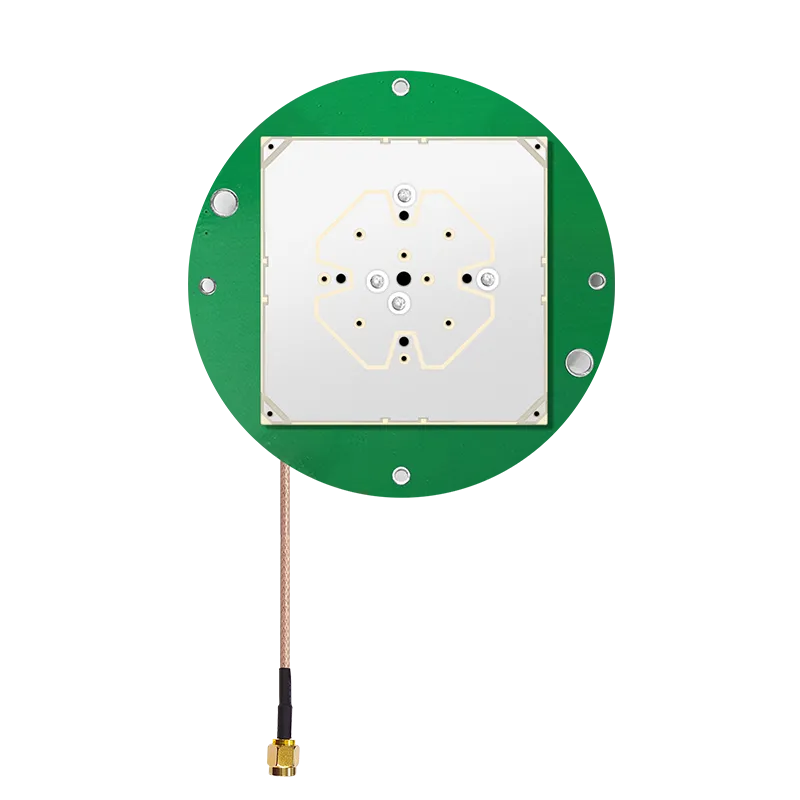
Furthermore, the choice of materials, such as ceramic patch antennas or flexible printed circuit (FPC) designs, significantly impacts the performance. Ceramic patch antennas are highly popular for GPS and GNSS applications due to their high dielectric constant, which allows for significant size reduction. However, they are sensitive to the ground plane size. On the other hand, FPC antennas offer more flexibility in placement, allowing them to be mounted on the inner walls of the device housing. Successfully implementing an internal antenna for embedded systems involves iterative testing using tools like vector network analyzers to measure the voltage standing wave ratio (VSWR) and return loss, ensuring the system is tuned to the exact operating frequency of the desired GNSS or wireless protocol.
Optimizing signal integrity in high-density environments
Electromagnetic interference (EMI) is the primary adversary when working with an internal antenna for embedded systems. High-speed digital lines, switching power supplies, and high-frequency clock signals can generate significant noise that desensitizes the RF receiver. To mitigate this, developers must employ strategic shielding and component placement. Sensitive RF components should be placed as far as possible from noise-generating sources, and dedicated RF shields should be used to isolate the GNSS module. Yonghao provides modules with built-in filters and low-noise amplifiers (LNA) to help combat these challenges, ensuring that the signal-to-noise ratio remains high even in crowded electronic environments.
Another critical factor is the orientation of the device. Since an internal antenna for embedded systems often has a specific polarization (usually circular for GNSS), the orientation of the module within the final product housing must align with the typical usage scenario. For instance, in an agricultural drone or a robotic mower, the antenna must face skyward to maintain a lock on multiple satellite constellations like GPS, BDS, and GLONASS. Advanced simulation software can help predict how the housing material (plastic, glass, or composite) will affect the radiation pattern, allowing engineers to make adjustments before the first prototype is ever manufactured.
Quantifiable advantages of integrated RF solutions
The primary benefit of utilizing a high-quality internal antenna for embedded systems is the drastic reduction in total system volume. By eliminating the need for external SMA connectors and cables, developers can create more durable and waterproof designs, which is essential for outdoor applications like maritime navigation or precision agriculture. Additionally, integrated solutions reduce the bill of materials (BOM) cost and simplify the assembly process, leading to higher manufacturing yields and lower failure rates in the field. When the antenna is integrated directly into the module, the impedance matching is often handled by the manufacturer, reducing the RF design burden on the end-user.
Moreover, an internal antenna for embedded systems allows for better industrial design. Modern consumers and industrial operators expect devices that are ergonomic and free of protruding parts that could break or snag. By leveraging the expertise of a company like Yonghao, which offers integrated modules with built-in antennas, developers can focus on their core application logic while relying on proven RF performance. This leads to a faster time-to-market and a more competitive product offering in the global GNSS market.
Why choose Yonghao for your embedded GNSS needs
Yonghao (XYZGNSS) is a leader in high-precision positioning technology, specializing in the development of RTK modules, GNSS antennas, and anti-jamming systems. Our expertise in the internal antenna for embedded systems ensures that our customers receive products that are not only accurate but also easy to integrate into complex hardware. We understand the challenges of modern RF design and provide comprehensive technical support to help you achieve the best possible performance.
Our product lineup includes the YM-181Q small size GNSS module, which features an integrated antenna and built-in compass, making it ideal for compact drone designs. For those requiring a robust GPS solution, the YM-450Q integrated antenna module offers exceptional sensitivity and reliability. We also offer professional-grade RTK GNSS antennas and advanced anti-jamming devices to protect your systems from interference in contested environments.
Our core advantages include:
High-precision RTK technology for centimeter-level accuracy.
Extensive experience in miniaturized internal antenna for embedded systems.
Robust R&D capabilities for custom GNSS solutions.
Proven track record in UAV, robotics, and precision agriculture.
Frequently asked questions
Q1: How do I choose the best internal antenna for embedded systems?
Choosing the right antenna depends on your specific application, available PCB space, and the required satellite constellations. For high-precision tasks, a ceramic patch internal antenna for embedded systems is often preferred due to its gain and stability. Yonghao offers various integrated modules that pre-match the antenna to the receiver, simplifying the selection process for engineers.
Q2: What is the main challenge when integrating an internal antenna for embedded systems?
The primary challenge is managing electromagnetic interference from other components on the board. Since the internal antenna for embedded systems is located inside the device, it is closer to noise sources like processors and power regulators. Proper shielding and careful PCB layout are essential to maintain high signal quality.
Q3: Can an internal antenna for embedded systems provide RTK-level accuracy?
Yes, when paired with a high-performance RTK engine like those found in Yonghao's modules, an internal antenna for embedded systems can achieve centimeter-level accuracy. The key is ensuring the antenna has a clear view of the sky and a stable ground plane to minimize multipath errors.
Q4: Does the housing material affect the internal antenna for embedded systems?
Absolutely. Plastic and glass housings are generally transparent to RF signals, but they can still cause minor frequency shifts. Metallic or carbon fiber housings will block the signal entirely. When using an internal antenna for embedded systems, it is vital to use RF-friendly materials for the enclosure.
Q5: Why are Yonghao integrated modules better than discrete antenna designs?
Yonghao integrated modules combine the receiver and the internal antenna for embedded systems into a single, pre-tuned package. This eliminates the need for complex RF trace routing and impedance matching, significantly reducing design time and the risk of performance issues in the final product.
Ready to optimize your embedded design?
Explore our full range of high-precision GNSS modules and antennas today.