


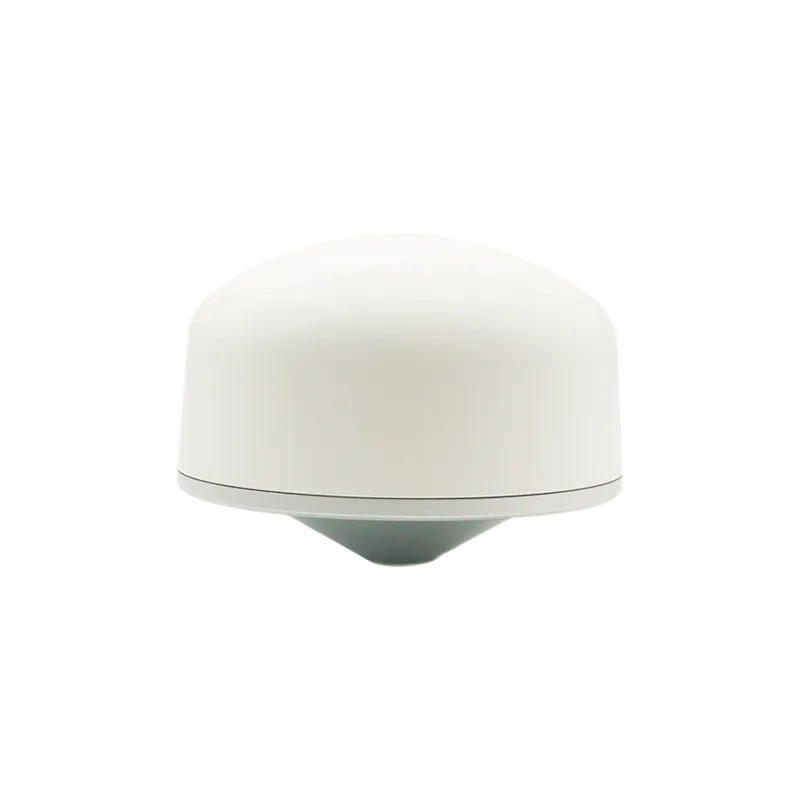
The landscape of modern farming is undergoing a digital revolution, where data-driven decisions replace guesswork. At the heart of this transformation lies the RTK GNSS antenna for precision agriculture. This technology has shifted the paradigm from traditional broad-acre farming to precise, localized management of every square inch of the field. By utilizing Real-Time Kinematic (RTK) corrections, farmers can achieve centimeter-level accuracy, which was once thought impossible. This introduction to high-precision navigation is not just about better steering; it is about the fundamental optimization of resource allocation, labor reduction, and environmental sustainability in the face of a growing global population.
The fundamental role of high-precision positioning in smart farming
In the context of global food security, precision agriculture has emerged as the most viable solution to increase yields while minimizing inputs. The integration of an RTK GNSS antenna for precision agriculture allows machinery to follow pre-defined paths with an error margin of less than 2.5 centimeters. This level of precision is critical for operations such as strip-tilling, planting, and nutrient application. Without high-precision GNSS (Global Navigation Satellite System) data, autonomous or semi-autonomous tractors would struggle with signal drift, leading to overlaps or gaps in the field. These errors, though seemingly small, accumulate over hundreds of acres, resulting in significant financial losses through wasted seed, fertilizer, and fuel.
Beyond simple navigation, the precision provided by RTK technology enables the creation of detailed digital maps. These maps allow farmers to analyze soil health and crop performance at a granular level. When equipped with a high-quality antenna, agricultural robots and drones can perform targeted interventions, such as spot-spraying weeds instead of blanket-spraying an entire field. This strategic approach not only saves money but also protects the ecosystem by reducing the chemical load on the land. As the industry moves toward fully autonomous farming systems, the reliability of the GNSS signal becomes the backbone of the entire operational infrastructure.
Technical advantages of multi-constellation RTK GNSS antennas
The modern RTK GNSS antenna for precision agriculture is a sophisticated piece of hardware designed to receive signals from multiple satellite constellations, including GPS, BDS (Beidou), GLONASS, and Galileo. This multi-constellation support is vital for maintaining a "fix" in challenging environments, such as fields near dense tree lines, hilly terrain, or during periods of atmospheric interference. By accessing a larger number of satellites, the antenna ensures a faster Time To First Fix (TTFF) and more robust signal stability. For a farmer, this means less downtime waiting for the system to calibrate and more time spent on productive field work.
Furthermore, advanced antennas are engineered with multipath mitigation technology. In agricultural settings, signals can reflect off buildings or heavy machinery, creating "ghost" signals that confuse standard receivers. A professional-grade antenna filtered for multi-frequency bands (L1, L2, and L5) can distinguish between direct satellite signals and reflected ones. This ensures that the positioning data remains accurate even in complex topographies. Additionally, the phase center stability of these antennas is rigorously tested to ensure that the physical center of the antenna remains consistent with the electrical signal center, a requirement for achieving true centimeter-level precision consistently over time.
Maximizing field efficiency and reducing operational waste
Efficiency in the field is measured by the ability to complete tasks in the shortest time with the least amount of wasted energy and material. Utilizing an RTK GNSS antenna for precision agriculture directly impacts the "pass-to-pass" repeatability of farm equipment. When a sprayer follows the exact path of the planter, there is no crushing of young crops and no double-application of chemicals. Studies have shown that RTK-enabled guidance systems can reduce input costs by 10% to 15% simply by eliminating overlaps. In large-scale operations, this translates to tens of thousands of dollars saved annually, significantly improving the ROI (Return On Investment) of the technology.
Moreover, high-precision antennas facilitate "tramline" farming and controlled traffic farming (CTF). By restricting heavy machinery to the exact same tracks year after year, farmers can reduce soil compaction across the rest of the field. This improves soil structure, water infiltration, and root development, leading to healthier crops and higher yields. The antenna's role here is to provide the long-term repeatability required to find those tracks even when they are not visible to the human eye. This level of control allows for night-time operations with the same level of accuracy as daytime, effectively doubling the operational window during critical windows like planting or harvesting seasons.
Why Yonghao leads the way in precision agricultural solutions
As a pioneer in the GNSS industry, Yonghao has dedicated years of R&D (Research and Development) to perfecting the RTK GNSS antenna for precision agriculture. Our products are designed to withstand the harsh conditions of the agricultural environment, from extreme vibration on heavy tractors to exposure to dust, rain, and UV radiation. The Yonghao advantage lies in our commitment to signal integrity and durability. We understand that in the middle of a planting season, equipment failure is not an option. That is why our antennas, such as the RTK GNSS antenna YH-6311, are built with IP67-rated enclosures and high-gain elements to ensure performance in every condition.
Our comprehensive product line includes everything from high-precision modules like the RTK GNSS module UM980 to integrated antenna systems. We provide farmers and OEMs (Original Equipment Manufacturers) with the tools they need to build smarter machines. By choosing Yonghao, you are not just buying a component; you are investing in a partnership backed by professional technical support and a deep understanding of the agricultural sector. Our navigation products are optimized for low power consumption and high compatibility, making them easy to integrate into existing farming ecosystems.
Future trends in RTK technology for sustainable farming
The future of farming is undeniably autonomous. As we look forward, the RTK GNSS antenna for precision agriculture will play an even more critical role in the deployment of "swarm" robotics—groups of small, autonomous robots working together to manage a field. These systems require highly synchronized and accurate positioning data to avoid collisions and ensure comprehensive field coverage. Furthermore, the integration of 5G and satellite-based augmentation systems (SBAS) will complement RTK, providing redundancy and even faster data transmission speeds for real-time field monitoring.
Sustainability will also drive technological evolution. Precision antennas will enable even more advanced variable rate technologies (VRT), where fertilizer and water are applied not just by the foot, but by the plant. This "ultra-precision" will be the key to meeting environmental regulations and consumer demand for transparently sourced, sustainably grown food. At Yonghao, we are already developing the next generation of GNSS solutions to meet these challenges, ensuring that farmers have the precision they need to thrive in a changing world.
Conclusion
The adoption of a high-performance RTK GNSS antenna for precision agriculture is no longer a luxury for modern farming; it is a necessity for staying competitive and sustainable. By providing centimeter-level accuracy, ensuring signal stability in difficult environments, and enabling autonomous operations, this technology empowers farmers to do more with less. From reducing input costs to protecting soil health, the benefits are clear and quantifiable. As you look to upgrade your agricultural fleet, remember that the quality of your antenna determines the quality of your data—and your success in the field.
Frequently Asked Questions
Q1: How does an RTK GNSS antenna for precision agriculture differ from a standard GPS antenna?
Standard GPS antennas usually provide 2-5 meter accuracy, which is sufficient for general navigation but not for farming. An RTK GNSS antenna for precision agriculture uses a local base station or NTRIP network to provide real-time corrections, bringing accuracy down to the centimeter level, which is essential for row-crop farming.
Q2: Can Yonghao antennas work with all tractor brands?
Yes, Yonghao designs its GNSS solutions to be highly compatible. Our hardware supports standard NMEA protocols, allowing our RTK GNSS antenna for precision agriculture to integrate seamlessly with most third-party flight controllers and tractor guidance systems on the market.
Q3: What makes the RTK GNSS antenna for precision agriculture durable enough for field use?
Industrial antennas from Yonghao are built with specialized materials that resist chemical corrosion, high temperatures, and intense vibration. They are typically IP67 or IP69K rated, meaning they are completely dust-tight and can survive high-pressure water jets used during equipment cleaning.
Q4: Why is multi-frequency support important in an RTK GNSS antenna for precision agriculture?
Multi-frequency (L1/L2/L5) support allows the antenna to track multiple signals from the same satellite. This helps eliminate ionospheric errors and speeds up the time it takes to achieve a centimeter-level "fix," making the RTK GNSS antenna for precision agriculture much more reliable under heavy cloud cover or near trees.
Q5: How does Yonghao support its customers after the purchase?
Yonghao provides extensive technical support and customization services. We help our clients calibrate their RTK GNSS antenna for precision agriculture and offer guidance on system integration to ensure maximum efficiency and performance in their specific agricultural applications.
Ready to optimize your farming operations?
Contact Yonghao today for high-precision GNSS antennas and modules tailored to your precision agriculture needs.