


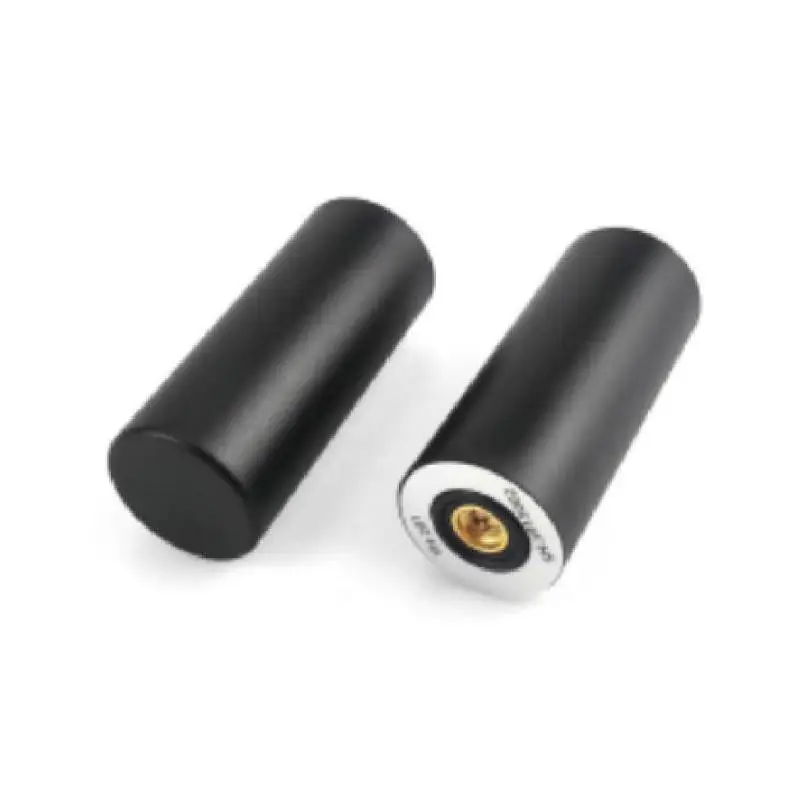
A helical antenna is what allows a GNSS receiver on a high-dynamic platform to hold a fix through maneuvers that would otherwise drop the satellites. While a patch antenna works well for a pedestrian or a slow-moving vehicle, a platform that banks, rolls, pitches, or changes heading rapidly will see the patch antenna's gain pattern swing off the satellite, and the fix will drop. A helical antenna delivers a more isotropic gain pattern that maintains satellite visibility across the full upper hemisphere regardless of platform attitude. This guide walks through what a helical antenna actually does, why it dominates high-dynamic applications, and the design choices that determine whether a helical antenna is worth the size and the BOM premium in your application.
If you are a UAV system architect, a flight-control engineer, or a high-dynamic platform integrator about to spec a helical antenna for the first time, the goal of this article is to give you a working framework for understanding the trade-offs, comparing helical designs, and matching the part to the dynamics of your platform. We will not push a single topology, because the right helical antenna depends on the application. What we will do is walk through the criteria that actually matter when the platform is maneuvering.
What a Helical Antenna Actually Does
A helical antenna uses a wire or a printed trace wound in a helix around a central support, with a ground plane at the base. The helix dimensions determine whether the antenna operates in normal mode (short helix, similar to a small loop) or axial mode (helix circumference close to a wavelength, which produces a circularly polarized beam along the helix axis). For GNSS applications, the helix is typically designed in axial mode to deliver a circularly polarized beam that covers the upper hemisphere.
In practice, a multi-turn helical antenna delivers a more isotropic gain pattern than a patch antenna. A patch antenna has a gain pattern that peaks at the zenith and rolls off by 10 dB or more at the horizon. A multi-turn helical antenna has a gain pattern that is more uniform across the upper hemisphere, and the roll-off toward the horizon is much shallower. The result is that a platform in a banked or rolled attitude still sees the satellites, and the fix is held through maneuvers that would drop a patch antenna.
Why Helical Antennas Drive High-Dynamic Platform Performance
A helical antenna is not just a more expensive version of a patch. It is a fundamentally different radiation pattern, and the difference shows up in three operational effects that matter for high-dynamic applications.
Fix retention during maneuvers. A UAV that banks at 45 degrees will see a patch antenna's gain toward the horizon drop by 8 to 10 dB. A multi-turn helical antenna will see the gain drop by only 3 to 5 dB. The difference is whether the GNSS fix is held through the maneuver or dropped. For a flight control system, the dropped fix is a safety event that the autopilot has to handle, and the helical antenna eliminates the dropped fix.
Multi-satellite visibility. A helical antenna delivers a more uniform gain pattern, which means more satellites are visible at any given moment. The receiver has more satellites to choose from, which improves the geometry, reduces the DOP, and improves the fix rate under canopy or in urban canyon. A patch antenna may see 8 satellites in the same sky, but a helical antenna may see 10 or 11.
Reduced sensitivity to mounting position. A patch antenna is sensitive to its mounting position on the platform, because the gain pattern peaks at the zenith and any tilt away from vertical reduces the gain toward the sky. A helical antenna is more forgiving of mounting position, because the gain pattern is more uniform. The result is that the helical antenna can be mounted in less-than-ideal positions without a significant performance penalty.
Key Specifications of a Helical Antenna for High-Dynamic Platforms
A helical antenna lives or dies by a small set of specifications. Reading a generic GNSS antenna datasheet without a framework is a recipe for buying the wrong part.
1. Number of turns and helix dimensions. A serious GNSS helical antenna has 4 to 8 turns, with the helix circumference close to a wavelength at the L1 center frequency. A 2-turn helical antenna will deliver a more uniform pattern than a patch, but a 6-turn helical antenna will deliver a significantly more uniform pattern. The trade-off is size; a 6-turn helical antenna is longer than a 2-turn helical antenna.
2. Gain uniformity across the upper hemisphere. A serious helical antenna has a gain variation of less than 5 dB across the upper hemisphere, from the horizon to the zenith. A patch antenna typically has a gain variation of 10 to 15 dB across the same range. The gain uniformity is the single most important specification for a high-dynamic application.
3. Axial ratio across the upper hemisphere. A serious helical antenna has an axial ratio below 3 dB across the upper hemisphere, which preserves the RHCP of the GNSS signal and rejects the cross-polarized multipath. A helical antenna with a 6 to 10 dB axial ratio trades polarization purity for size, and the trade shows up as worse multipath rejection in the field.
4. L1, L2, and L5 support. A modern helical antenna supports L1, L2, and L5 simultaneously, with the helix dimensions tuned to deliver gain across all three bands. A single-band L1 helical antenna is fine for legacy applications but is being phased out as multi-frequency receivers become the norm.
5. Ground plane dependence. A helical antenna is less sensitive to the ground plane size than a patch antenna, but it still relies on a ground plane for the back-radiation rejection. A serious helical antenna vendor publishes the gain and the axial ratio across multiple ground-plane sizes, so the user can match the antenna to the actual mounting surface on the platform.
How Helical Antennas Vary Across Applications
A helical antenna is the right answer for some applications and the wrong answer for others. The right answer depends on the dynamics of the platform, the accuracy target, and the form factor constraints.
UAV and drone applications. A helical antenna is the right answer for any UAV that has to bank, roll, or pitch aggressively during flight. A multirotor that hovers at high altitude, a fixed-wing that performs aerobatic maneuvers, or a VTOL that transitions between hover and forward flight will all benefit from the more uniform gain pattern of a helical antenna. The BOM premium is small relative to the safety improvement.
Flight control and autopilot. A helical antenna is the right answer for any flight control system that has to maintain a fix through aggressive maneuvers. The autopilot relies on a continuous GNSS fix for position, velocity, and attitude, and a dropped fix is a safety event. A helical antenna is what keeps the fix alive through the maneuvers that would otherwise drop it.
High-dynamic missiles and projectiles. A helical antenna is the right answer for any high-dynamic platform that has to maintain a fix through rapid heading changes. A missile, a smart munition, or a high-speed projectile will see the gain pattern of a patch antenna swing off the satellite every time the platform maneuvers, and a helical antenna is the only practical way to keep the fix alive.
Pedestrian and slow-moving applications. A helical antenna is usually overkill for pedestrian and slow-moving applications, where a patch antenna is sufficient. The size and BOM premium of a helical antenna are hard to justify for sub-decimeter accuracy on a pedestrian, and a patch antenna is the right answer for these applications.
Common Pitfalls in Helical Antenna Selection
Across our helical antenna deployments, the same four mistakes show up more often than the others. Skim them before you commit to a part.
Underestimating the size. A multi-turn helical antenna is significantly larger than a patch antenna, and the size has to be accommodated in the platform design. A 6-turn helical antenna is typically 80 to 120 mm long, which is too large for a small UAV and too large for any wearable application. Choose a 2-turn or 3-turn helical antenna if the size is constrained, and accept the lower gain uniformity.
Mounting the helical antenna next to a metallic object. A metallic object within 30 cm of the helical antenna can shift the gain pattern and degrade the multi-satellite visibility. The helical antenna has to be mounted with at least 30 cm of clearance from any metallic structure, including the airframe and the payload.
Using a helical antenna on a static platform. A helical antenna delivers a more uniform gain pattern, which is an advantage on a high-dynamic platform. On a static platform, the more uniform pattern is a disadvantage, because the peak gain at the zenith is lower than a patch antenna. If the platform is static, choose a patch antenna and use the BOM savings for a better LNA or a tighter matching network.
Forgetting the vibration environment. A helical antenna is a mechanical resonator, and the platform vibration can excite the resonance and modulate the gain pattern. Use a vibration-isolated mount, especially on helicopters and rotorcraft where the vibration environment is severe.
Where We Fit: xyzgnss Helical Antenna Portfolio
At xyzgnss we have built our helical antenna portfolio around the same principle that drives the rest of our GNSS product line: tight gain uniformity specifications, documented behavior, and reference designs that move from the bench to a deployed high-dynamic platform without a re-engineering step. Our helical antenna family includes 2-turn, 4-turn, and 6-turn variants for UAV, flight control, and high-dynamic applications.
You can browse the YH-215 multi-satellite multi-frequency helix GNSS antenna as a representative 2-turn compact part, or our YH-301 multi-satellite multi-frequency helix GNSS antenna for a 4-turn mid-range option, and the YH-201 multi-satellite multi-frequency helix GNSS antenna for a 6-turn high-uniformity part. The wider all-antenna product page lists our complete portfolio.
If you are evaluating a helical antenna for a new high-dynamic program, our technical team can ship an evaluation kit with the antenna, a matched reference design, and a measured gain pattern across elevation. We have supported UAV, flight control, and high-dynamic platform customers across multiple regions, and we are happy to bring that field experience to your project.
Conclusion
A helical antenna is the right answer for any high-dynamic platform that has to maintain a GNSS fix through aggressive maneuvers. The more uniform gain pattern is what makes the difference between a fix that survives a banked turn and a fix that drops at the worst possible moment. If you are weighing a helical antenna for a new high-dynamic program, our engineering team can help you compare the candidates in your real environment before you commit to a part.
Need a helical antenna for a high-dynamic platform? Talk to our engineering team about an evaluation kit, a measured gain pattern, and a reference design for your application. Contact xyzgnss to start a project →
Frequently Asked Questions
Q1: What Is a Helical Antenna and Why Is It Used for High-Dynamic Platforms?
A helical antenna is a GNSS antenna that uses a wire or a printed trace wound in a helix around a central support. The helix dimensions are tuned to deliver a circularly polarized beam along the helix axis, with a more uniform gain pattern across the upper hemisphere than a patch antenna. The uniform gain pattern is what makes a helical antenna the right answer for high-dynamic platforms that have to maintain a fix through aggressive maneuvers.
Q2: How Many Turns Does a Helical Antenna Need for UAV Applications?
A 2-turn helical antenna is a good entry point for small UAV applications where the size is constrained. A 4-turn helical antenna is the right answer for mid-size UAV applications where the gain uniformity is more important than the size. A 6-turn helical antenna is the right answer for high-dynamic applications where the maximum gain uniformity is required. The trade-off is size; a 6-turn helical antenna is significantly longer than a 2-turn helical antenna.
Q3: Can a Helical Antenna Replace a Patch Antenna on a Static Platform?
A helical antenna can replace a patch antenna on a static platform, but the more uniform gain pattern is a disadvantage in that case, because the peak gain at the zenith is lower than a patch antenna. A static platform benefits from the higher peak gain of a patch antenna, and a helical antenna is usually overkill. The right answer depends on the platform dynamics; choose a patch antenna for static platforms and a helical antenna for high-dynamic platforms.
Q4: Is a Helical Antenna Sensitive to Vibration?
A helical antenna is a mechanical resonator, and the platform vibration can excite the resonance and modulate the gain pattern. The modulation is small in most cases, but it can be a problem on helicopters and rotorcraft where the vibration environment is severe. Use a vibration-isolated mount, and validate the gain pattern under vibration before committing to a BOM. A serious helical antenna vendor publishes a vibration test report alongside the gain pattern data.
Q5: Where Can I Get a Helical Antenna for a High-Dynamic Application?
We supply helical antennas in 2-turn, 4-turn, and 6-turn variants for UAV, flight control, and high-dynamic applications. Each antenna ships with a measured gain pattern across elevation, an axial ratio dataset, and a vibration test report. Contact our engineering team and we can share the test report for the helical antenna you are evaluating, along with a sample antenna and a reference design for your application.