
Headline: What is the best antenna for a permanent RTK base station?
-
For a permanent or semi-permanent RTK base station, the best antenna is a geodetic-grade choke ring or a similar high-performance survey antenna. These antennas are designed with one primary goal: to provide the cleanest possible signal by offering the absolute best rejection of multipath interference. At XYZ-GNSS, we provide this class of RTK GNSS antenna for professionals setting up reference stations. Their larger size and stable mounting ensure an exceptionally stable phase center and provide pristine correction data. While overkill for a rover, investing in a high-quality geodetic RTK GNSS antenna from XYZ-GNSS for your base station is a critical step in ensuring the highest possible accuracy and reliability for every rover that uses its data.
Headline: Do I need a ground plane for my RTK GNSS antenna?
-
Whether you need a ground plane depends on the type of RTK GNSS antenna you are using. For a survey-style patch antenna, a ground plane is integrated into the antenna's design and is essential for its performance. For a lightweight helical antenna, like the ones XYZ-GNSS provides for UAVs, the design is often self-contained and performs very well without a large, separate ground plane, which is a key part of its weight-saving advantage. However, even with these designs, keeping a small "keep-out" zone of metal away from the antenna base is recommended. When you purchase an RTK GNSS antenna from XYZ-GNSS, our datasheets and application notes will provide clear guidance on any specific mounting or ground plane requirements to ensure you achieve optimal performance.
Headline: Why is my RTK fix taking a long time or stuck in "Float"?
-
If your RTK system is taking a long time to get a "Fixed" solution and is stuck in "Float," it means the receiver is struggling to resolve the integer ambiguities. While several factors can cause this, the most common culprit is poor signal quality, which is directly related to your antenna. This can be caused by high multipath interference or by using a single-band antenna with a multi-band receiver. The solution is to ensure you are using a high-quality, multi-band RTK GNSS antenna from a specialist like XYZ-GNSS. Our antennas provide superior multipath rejection and clean signal reception across all bands, giving your receiver the high-quality data it needs to solve for a Fixed solution quickly and reliably, even in difficult environments.
Headline: How do I choose the right RTK GNSS antenna for my rover?
-
Choosing the right RTK GNSS antenna for your rover involves balancing performance, size, and weight for your specific application. For a survey pole, a rugged, lightweight patch or compact helical antenna from XYZ-GNSS is ideal, offering great performance and durability. For a drone, the choice is clear: a SWaP-optimized quadrifilar helical RTK GNSS antenna from XYZ-GNSS provides the best possible performance-to-weight ratio, which is critical for maximizing flight time. The key for any rover is that the antenna must be multi-band (L1/L2/L5) to ensure you can get a fast and reliable fix from your base station or NTRIP network. Our team at XYZ-GNSS can help you select the perfect rover antenna to match your receiver and your mission profile.
Related Products
More items about rtk gnss antenna
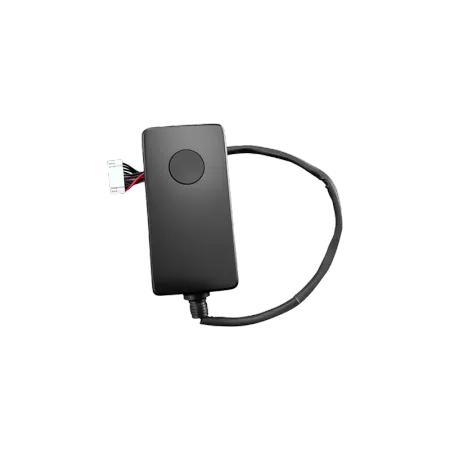
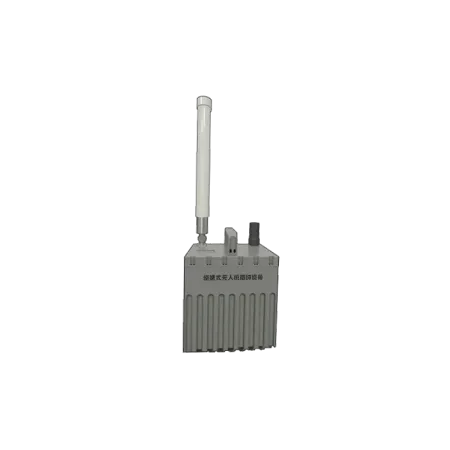
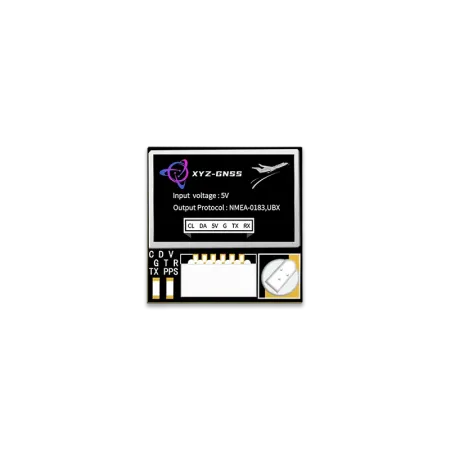
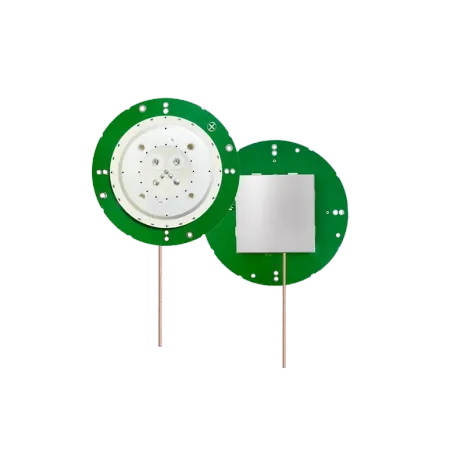

We Have The Best Solutions for Your Business
Precision Navigation Solutions for a Connected World
As a leading solution supplier integrating R&D, manufacturing, and sales, we offer a wide range of products including GNSS satellite antennas, positioning terminals, data communication products, and customized high-precision Beidou solutions. Our expertise spans measurement & monitoring, aerospace, communication time service, autonomous driving, mechanical control, intelligent transportation, driving tests, and training.
Frequently Asked Question
Do you have any question?
The key differences are its multi-band capability and its phase center stability. A professional RTK GNSS antenna is designed to receive multiple frequency signals (L1, L2, L5) from each satellite, which is essential for the RTK algorithm to correct for ionospheric delay. It is also engineered to have a highly stable phase center, meaning its electronic measurement point does not wander, which is critical for repeatable, high-accuracy measurements.
"Multi-band" means the RTK GNSS antenna can receive and process several different frequency bands (L1, L2, L5) broadcast by the GNSS constellations. By comparing the timing of signals on these different frequencies, a compatible receiver can accurately model and remove the largest source of error in satellite positioning—the ionospheric delay. This results in a much faster and more reliable centimeter-level fix.
Yes, for a stationary base station, the ideal RTK GNSS antenna is a geodetic-grade antenna, often a choke ring or a similar high-performance design. These antennas are larger and designed to offer the absolute best multipath rejection and phase center stability, providing the cleanest possible correction data for all rovers in its network.
For a drone or any lightweight rover, the best choice is a SWaP-optimized (Size, Weight, and Power) RTK GNSS antenna, typically a quadrifilar helical antenna. These antennas provide excellent multipath rejection and a stable phase center in a very small and lightweight package, making them perfect for applications where payload weight is a primary concern.
The phase center is the precise virtual point within the RTK GNSS antenna from which the satellite signal measurements are referenced. For high-precision work, it is absolutely critical that this point remains stable and consistent as the antenna tracks satellites across the sky. High-quality antennas are designed to minimize "Phase Center Variation" (PCV) to prevent measurement errors.
Yes, absolutely. A high-quality RTK GNSS antenna provides a cleaner signal with less noise and less multipath error to the receiver. This higher quality data allows the receiver's RTK engine to solve the integer ambiguities much more quickly and reliably. This means you will achieve the centimeter-level "fixed solution" faster and maintain it more robustly in challenging environments.