
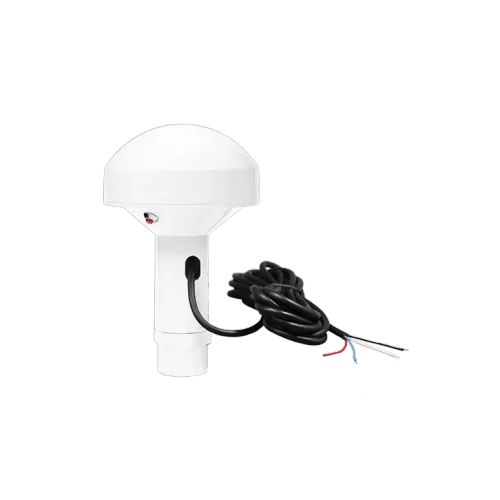
Headline: How to connect a GPS receiver to a computer or microcontroller
Connecting a GPS receiver to a host device like a computer, Raspberry Pi, or Arduino is typically done over a serial interface, most commonly UART (TTL level). The receiver will have pins for power (VCC), ground (GND), transmit (TX), and receive (RX). You connect the receiver's TX pin to your microcontroller's RX pin to receive the data. The GPS receiver from XYZ-GNSS outputs data in the standard NMEA 0183 format, which is a simple text-based protocol. Your code will need to read the incoming serial data, buffer it line by line, and then parse these NMEA "sentences" to extract the latitude, longitude, and other information. XYZ-GNSS provides clear documentation and pinouts for all our receivers, making this integration process straightforward for developers and hobbyists alike.
Headline: Why is my GPS receiver not getting a fix?
If your GPS receiver is not getting a position fix, the issue is almost always related to the signal it's receiving. The most common cause is a poor antenna setup or location. The antenna must have a clear view of the sky, away from metal obstructions. If the antenna is fine, the issue could be RF interference from other electronics near the receiver. A high-quality GPS receiver from XYZ-GNSS is designed to combat these issues. Our receivers have highly sensitive front-ends to lock onto weak signals and advanced filtering to reject electronic noise. By pairing one of our receivers with a suitable external antenna from XYZ-GNSS, you can dramatically improve signal quality and solve the vast majority of "no fix" issues, ensuring a reliable lock even in challenging conditions.
Headline: What is the best GPS receiver for car tracking?
The best GPS receiver for car tracking needs specific features that go beyond a basic module. First, it must be automotive-grade, able to withstand the temperature extremes and vibrations of a vehicle. Second, for premium tracking, it should have Dead Reckoning (DR) capability. A DR-enabled GPS receiver from XYZ-GNSS uses an internal IMU (Inertial Measurement Unit) to continue tracking the vehicle's position through tunnels and parking garages where satellite signals are lost. This provides a seamless, uninterrupted location track. Finally, it needs to be highly sensitive and multi-constellation to perform well in urban canyons. The specialized automotive receivers from XYZ-GNSS combine all these features, providing the robust, continuous, and accurate data that professional fleet management systems require.
Headline: How does an RTK GPS receiver achieve centimeter accuracy?
An RTK GPS receiver achieves centimeter accuracy through a technique called differential positioning. It uses two receivers: one is a stationary "base station" at a known location, and the other is the moving "rover." Both receivers observe the same satellites, but the base station can calculate the error in the satellite signals by comparing the satellite's reported position with its own known-true position. It then broadcasts this error data as a correction stream to the rover in real-time. The rover's GPS receiver, a specialized RTK model from a provider like XYZ-GNSS, ingests these corrections and applies them to its own measurements. This process cancels out most atmospheric and other errors, allowing the rover to resolve its position down to the centimeter level, a feat impossible for a standalone receiver.
Related Products
More items about gps receiver
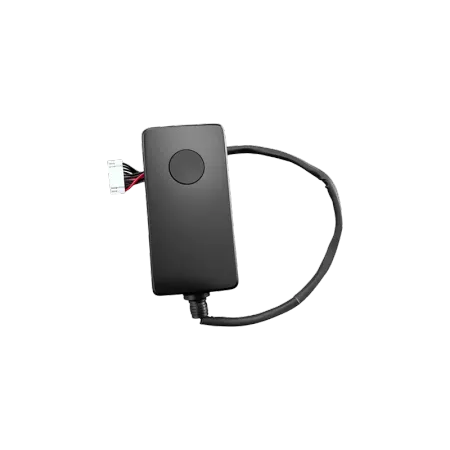
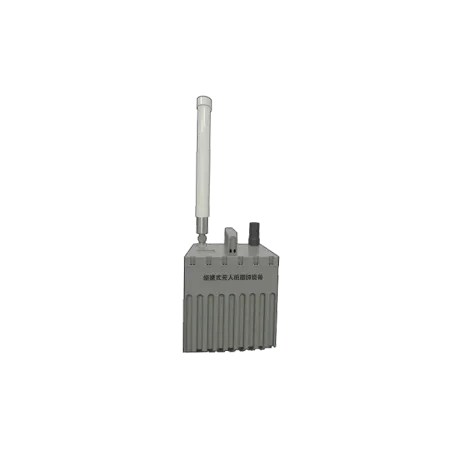
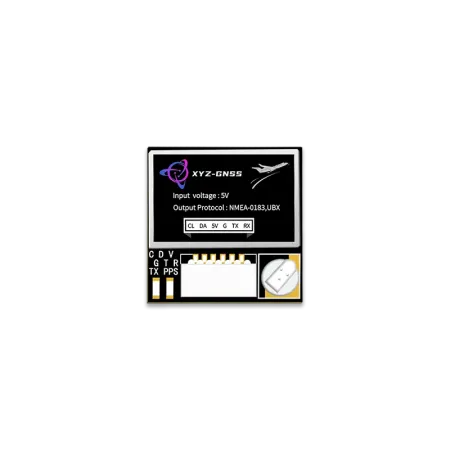

We Have The Best Solutions for Your Business
Precision Navigation Solutions for a Connected World
As a leading solution supplier integrating R&D, manufacturing, and sales, we offer a wide range of products including GNSS satellite antennas, positioning terminals, data communication products, and customized high-precision Beidou solutions. Our expertise spans measurement & monitoring, aerospace, communication time service, autonomous driving, mechanical control, intelligent transportation, driving tests, and training.
Frequently Asked Question
Do you have any question?
A GPS receiver is the electronic engine that processes satellite signals to calculate a position. The antenna is the separate component that physically captures the radio waves from the satellites and feeds them to the receiver. Think of it like a radio: the antenna picks up the station, but the receiver inside is what decodes the signal into music. They must work together, but they are two distinct parts of the system.
GPS is the specific satellite constellation operated by the U.S. government. GNSS (Global Navigation Satellite System) is the general term for all satellite positioning systems, including Russia's GLONASS, China's Beidou, and Europe's Galileo. A modern, high-performance GPS receiver is almost always a GNSS receiver, meaning it can use signals from multiple constellations at once for a faster, more accurate, and more reliable position.
A multi-band (e.g., L1/L2 or L1/L5) GPS receiver can process signals on multiple different frequencies from the same satellite. This advanced capability allows it to identify and correct for a major source of error called ionospheric delay. This is the core technology that enables RTK (Real-Time Kinematic) and achieves centimeter-level accuracy, making it essential for surveying, drones, and precision agriculture.
TTFF is the time it takes for a GPS receiver to calculate its first position after it's turned on. A "cold start" (with no prior data) can take a minute or more. A fast TTFF is critical for a good user experience. High-quality receivers use features like A-GNSS (Assisted GNSS) to download satellite data over the internet, allowing for a "hot start" that takes only a few seconds.